Male sexual health is defined as a man’s physical, mental, and emotional well-being related to sexuality, encompassing far more than the absence of disease or dysfunction. According to Weill Cornell Medicine, it covers the full capacity to enjoy and engage in sexual activity, maintain reproductive function, and sustain confidence in intimate relationships. The core domains include libido, erectile function, ejaculation control, and fertility. When any of these areas falters, the effects ripple outward into mood, relationships, and overall quality of life. This guide covers common male sexual issues, their connections to broader health, modern treatment approaches, and practical lifestyle strategies you can act on today.
What is male sexual health and what does it actually cover?
Male sexual health spans four interconnected domains: libido (sex drive), erectile function, ejaculation, and reproductive health. Each domain depends on a complex interplay of hormones, blood flow, nerve signals, and psychological state. A problem in one area frequently affects the others.
Libido is driven primarily by testosterone, though dopamine, cortisol, and thyroid hormones all play supporting roles. Erectile function depends on healthy blood vessels and nerves delivering the right signals at the right time. Ejaculation involves both muscular and neurological coordination. Reproductive health, which includes sperm quality and count, reflects the overall state of the male hormonal and metabolic system.
Sexual dysfunction is highly subjective. Men seek help based on personal distress rather than a fixed clinical threshold. This means what counts as a problem for one man may be entirely normal for another. That distinction matters because it shapes how and when to seek support.
What are common male sexual health issues and how do they affect men?
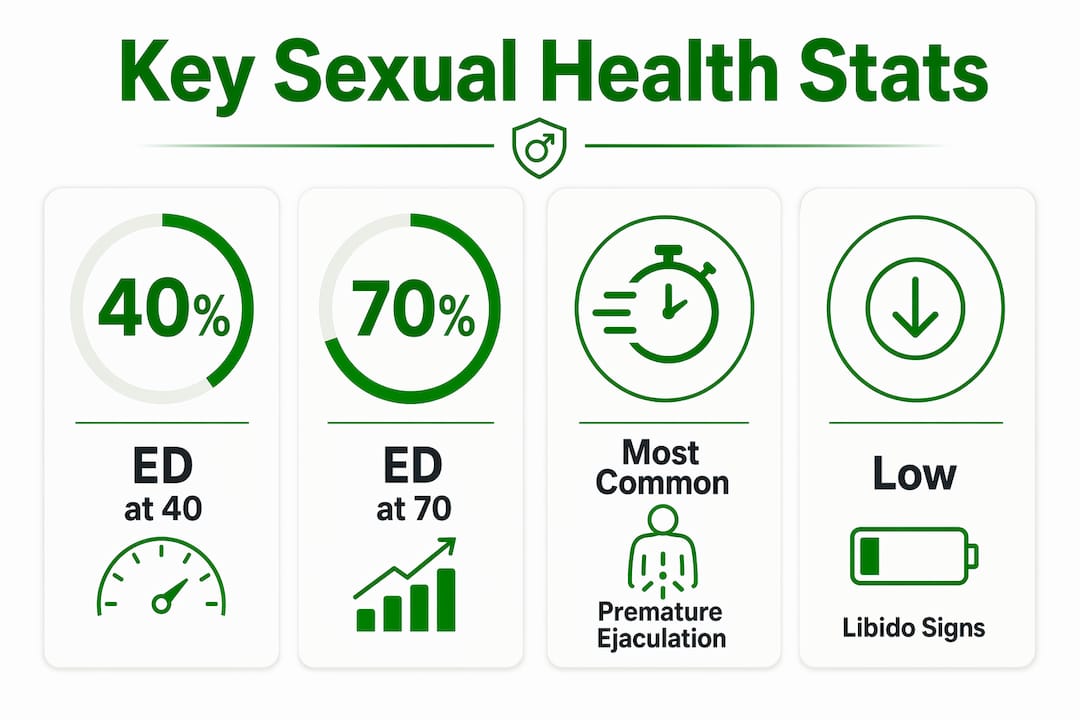
Erectile dysfunction (ED) is the most widely recognised male sexual issue. ED affects about 40% of men at age 40 and rises to 70% by age 70. Those figures show that ED is not a rare or shameful condition. It is a common, age-related health issue that responds well to treatment when caught early.

Premature ejaculation (PE) is the most common ejaculatory disorder, affecting men across all age groups. Delayed ejaculation, where reaching climax takes an unusually long time or becomes impossible, is less common but equally distressing. Both conditions have psychological and physical roots, and both benefit from professional assessment rather than self-management alone.
Low libido is another frequent concern. Reduced sex drive often signals hormonal imbalance, particularly low testosterone, but chronic stress, poor sleep, and relationship difficulties are equally common triggers. Peyronie’s disease, which involves scar tissue forming inside the penis and causing painful or curved erections, affects a meaningful proportion of men and is frequently underreported due to embarrassment.
Infertility is a reproductive health issue that many men overlook when thinking about topics on male health. Infertility affects approximately 15% of couples, with male factors involved in half of those cases. That statistic challenges the persistent myth that fertility problems are primarily a female concern.
These conditions affect more than physical function. They carry psychological weight, reducing self-esteem, creating anxiety around intimacy, and straining relationships. Addressing them early prevents that weight from compounding over time.
How are male sexual health and overall physical health interconnected?
Sexual function is one of the body’s most sensitive indicators of general health. Erectile dysfunction often precedes cardiovascular events because the small arteries supplying the penis show signs of disease before the larger cardiac vessels do. A man experiencing ED in his forties may be receiving an early warning about his heart health, not just his sexual function.
Diabetes, obesity, and high blood pressure all directly impair erectile function by damaging blood vessels and nerves. Hormonal conditions, including low testosterone, hypothyroidism, and adrenal dysfunction, reduce libido and affect sperm production. Treating the underlying condition frequently improves sexual function without any direct sexual health intervention.
Pro Tip: If you are experiencing persistent ED, ask your GP to check your blood pressure, fasting glucose, and testosterone levels at the same appointment. These three markers together give a far clearer picture than treating ED in isolation.
Men have a shorter average life expectancy than women by about 4.9 years, partly because men engage less frequently with preventative healthcare. Sexual health concerns, when they motivate a man to see a doctor, can become the entry point for identifying serious conditions early. That is a genuine opportunity.
| Health condition | Effect on male sexual function |
|---|---|
| Cardiovascular disease | Reduces blood flow, directly impairing erections |
| Type 2 diabetes | Damages nerves and vessels, causing ED and low libido |
| Obesity | Lowers testosterone, increases oestrogen, reduces sex drive |
| Low testosterone | Reduces libido, energy, and sperm production |
| Chronic stress | Elevates cortisol, suppressing testosterone and sexual desire |
What modern treatments exist for male sexual wellness?
Treatment for male sexual issues has expanded well beyond a single pill. Oral medications help 50–70% of men with ED, making them a strong first line of treatment. However, they do not address the underlying cause and are not suitable for every man, particularly those on nitrate medications for heart conditions.
Non-surgical options now include low-intensity shockwave therapy, platelet-rich plasma (PRP) injections, and vacuum erection devices. Emerging regenerative therapies offer promising results for men who do not respond to oral medications. These approaches aim to restore tissue function rather than simply compensate for it.
Surgical options, including penile implants, are considered when other treatments have failed. They carry high satisfaction rates among men who choose them, but they are a last resort rather than a first step.
Comprehensive sexual health care includes metabolic and hormonal evaluation before any treatment begins. This matters because prescribing medication without understanding the root cause risks masking a progressive health decline. A thorough assessment by a urologist, endocrinologist, or sexual health specialist gives treatment a far stronger foundation.
Male sexual health requires multidisciplinary care involving urologists, psychologists, and physiotherapists working together. Psychological support is particularly valuable when anxiety, depression, or relationship conflict is driving the dysfunction. Physiotherapy addresses pelvic floor weakness, which contributes to both ED and premature ejaculation.
Pro Tip: Ask your specialist about a full hormonal and metabolic panel before starting any treatment. Knowing your testosterone, thyroid, and blood glucose levels helps target the actual cause rather than just the symptom.
How can lifestyle, nutrition, and natural remedies support male sexual health?
Maintaining healthy habits such as diet, exercise, sleep, and stress management forms the foundation of male sexual wellness. These are not optional extras. They are the conditions under which every other treatment works better.
Regular aerobic exercise improves blood flow, supports healthy testosterone levels, and reduces the cardiovascular risk factors that drive ED. Resistance training has an additional benefit: it directly supports testosterone production. Aim for at least 150 minutes of moderate activity per week, combining both types.
Diet plays a direct role in sex drive and erectile function. Foods rich in zinc, such as oysters, pumpkin seeds, and red meat, support testosterone production. You can read more about zinc and male sexuality and why it is one of the most studied nutrients in male reproductive health. Mediterranean-style eating patterns, which emphasise vegetables, legumes, whole grains, and healthy fats, are consistently associated with better erectile function.
Sleep is frequently underestimated as a sexual health factor. Testosterone is produced primarily during deep sleep. Men who sleep fewer than six hours per night show measurably lower testosterone levels than those sleeping seven to nine hours. Chronic sleep deprivation also raises cortisol, which directly suppresses sexual desire.
Herbal remedies have a long history in male sexual wellness. African roots and adaptogenic herbs, including those used in traditional West African medicine, have been used for generations to support libido, stamina, and erectile strength. You can explore herbal roots for male libido for a detailed look at the six most studied options. Natural remedies work best as part of a broader lifestyle approach rather than as a standalone fix. For persistent or worsening symptoms, a medical evaluation remains the right first step.
Key takeaways
Male sexual health is a multidimensional state that connects physical fitness, hormonal balance, mental well-being, and lifestyle choices, all of which must be addressed together for lasting improvement.
| Point | Details |
|---|---|
| Sexual health is broad | It covers libido, erectile function, ejaculation, and fertility, not just one area. |
| ED is common and treatable | It affects 40% of men at 40; oral medications help 50–70% of those who seek treatment. |
| ED can signal heart disease | Penile arteries show cardiovascular damage early, making ED a useful diagnostic signal. |
| Lifestyle is foundational | Diet, exercise, sleep, and stress management directly support every aspect of sexual function. |
| Multidisciplinary care works best | Urologists, psychologists, and physiotherapists together produce better outcomes than medication alone. |
My honest view on male sexual health in 2026
By Ayomide
The conversation around male sexual health has shifted considerably, but not enough. Men still wait too long before seeking help, and the reason is rarely ignorance. It is embarrassment, compounded by the cultural expectation that sexual performance is a measure of masculinity rather than a health metric.
What I have observed is that the men who do best are those who treat sexual health the same way they treat a knee injury or a persistent cough: as a signal worth investigating, not a weakness to hide. The physical and emotional benefits of addressing these issues early are substantial. The cost of delay is not just continued dysfunction. It is missed diagnoses, worsening cardiovascular risk, and years of avoidable distress.
The multidisciplinary model is the right direction. A urologist alone cannot address the psychological dimension of sexual anxiety. A psychologist alone cannot fix a vascular problem. The men who receive coordinated care, where hormonal, physical, and psychological factors are all assessed together, consistently report better outcomes and greater confidence.
Natural and herbal approaches have a genuine place in this picture, particularly for men who want to support their health proactively before problems become clinical. The key is being honest about what they can and cannot do. They support the conditions for good sexual health. They do not replace medical evaluation when something is genuinely wrong.
Go ahead and take your sexual health seriously. It is one of the clearest windows into your overall health, and the returns on addressing it well extend far beyond the bedroom.
— Ayomide
Gear1 and natural support for male sexual vitality
Men looking for a natural complement to their lifestyle approach have a genuinely interesting option in Gear1. Gear1 4Real African Bitters is a non-alcoholic herbal drink made from African roots and herbs, formulated to support libido, strengthen erections, prevent premature ejaculation, and improve sexual stamina.
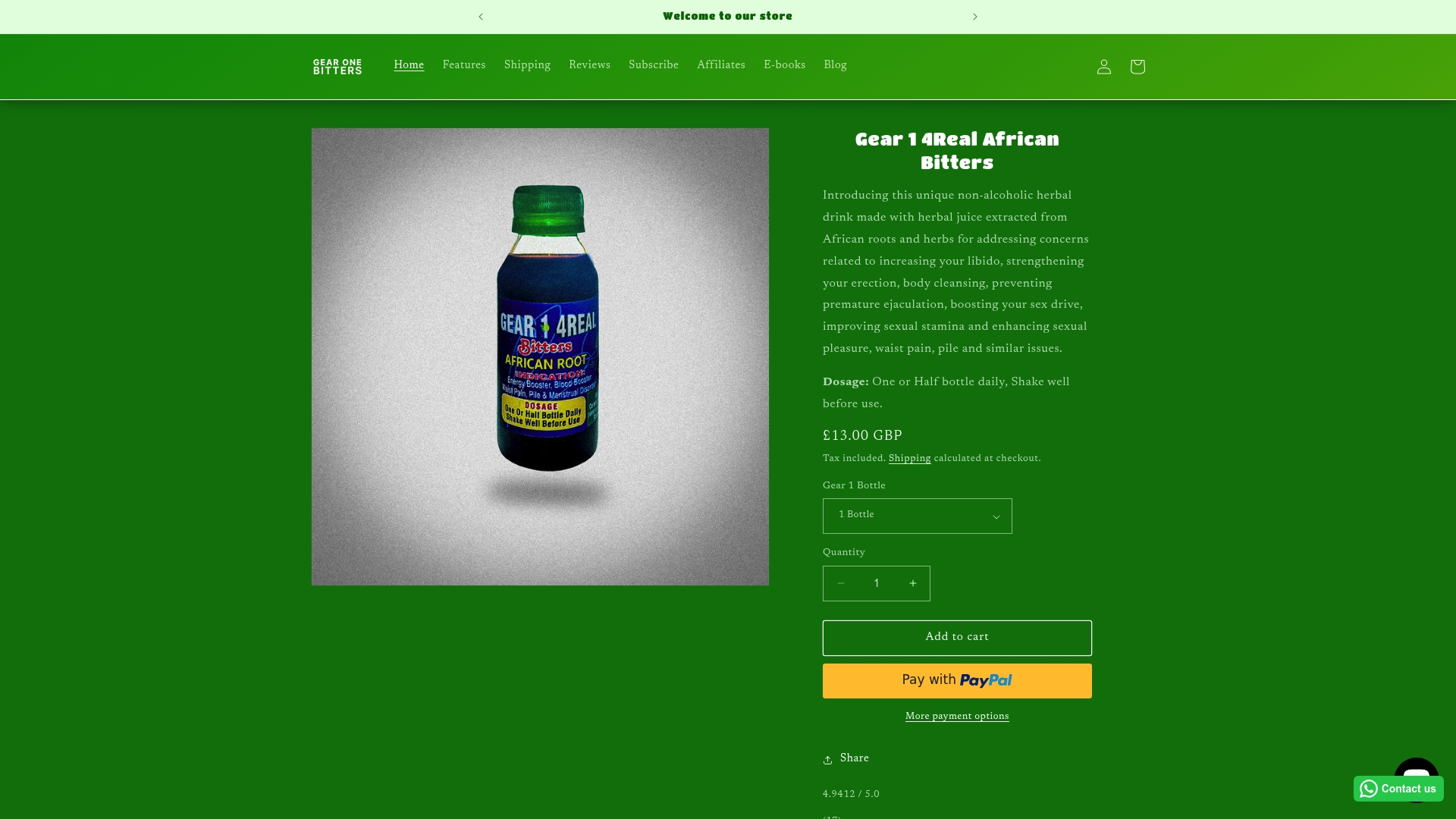
The formula draws on traditional African herbal medicine, using plant extracts with a long history of use in male sexual wellness. Gear1 is designed to work alongside a healthy diet and active lifestyle, not as a replacement for either. Men who want to understand exactly what goes into the formula can review the full Gear1 herbal ingredients on the product page. For those ready to see the full range of benefits, the Gear1 4Real Bitters features page covers everything in detail.
FAQ
What is the definition of male sexual health?
Male sexual health is defined as a man’s physical, mental, and emotional well-being related to sexuality, covering libido, erectile function, ejaculation, and reproductive health. It goes beyond the absence of disease to include the capacity for satisfying and safe sexual experiences.
How common is erectile dysfunction in men?
ED affects approximately 40% of men at age 40 and around 70% by age 70, making it one of the most prevalent male health conditions. It is treatable in the majority of cases, particularly when addressed early.
Can lifestyle changes genuinely improve male libido?
Yes. Regular exercise, a nutrient-rich diet including zinc and healthy fats, adequate sleep, and reduced stress all directly support testosterone production and sexual desire. These changes produce measurable improvements in libido and erectile function over time.
Is erectile dysfunction a sign of heart disease?
ED can be an early indicator of cardiovascular disease because the small penile arteries show signs of damage before the larger cardiac vessels. Men experiencing ED should discuss cardiovascular risk factors with their GP as part of their assessment.
When should a man seek medical help for sexual health concerns?
A man should seek medical advice when sexual difficulties cause personal distress, persist for more than a few weeks, or are accompanied by other symptoms such as fatigue, pain, or changes in urination. Early assessment leads to better outcomes and can identify underlying health conditions sooner.
Recommended
- Why zinc matters for male sexuality: 2026 guide – Gear 1 4Real African Bitters
- What causes sexual fatigue in men: 2026 guide – Gear 1 4Real African Bitters
- What is male libido? A complete guide for men – Gear 1 4Real African Bitters
- How to increase male libido naturally: 2026 guide – Gear 1 4Real African Bitters
About Gear 1 4Real African Bitters — a non-alcoholic herbal bitters made from African root and herb extracts, blended to a traditional recipe rooted in generations of use. See the product and full ingredients list.
Food supplement. Not intended to diagnose, treat, cure or prevent any disease.