Body detox is defined as the process of supporting the body’s natural elimination of toxins to restore hormonal balance and increase sexual desire. Understanding how body detox improves libido starts with one key fact: your liver, gut, and endocrine system are deeply connected. When toxins and spent hormones accumulate, testosterone and oestrogen fall out of balance, and sexual desire drops. Targeted detoxification corrects this by clearing hormone metabolites, reducing inflammation, and restoring the conditions your body needs to produce and respond to sex hormones properly.
How does liver detoxification support libido?
The liver is the body’s primary hormone processing organ. It breaks down used oestrogen and testosterone, packages them for elimination, and keeps circulating hormone levels stable. When the liver is overloaded by environmental pollutants, alcohol, or processed foods, this clearance slows down. The result is estrogen dominance, a state where excess oestrogen suppresses testosterone and reduces sexual desire in both men and women.
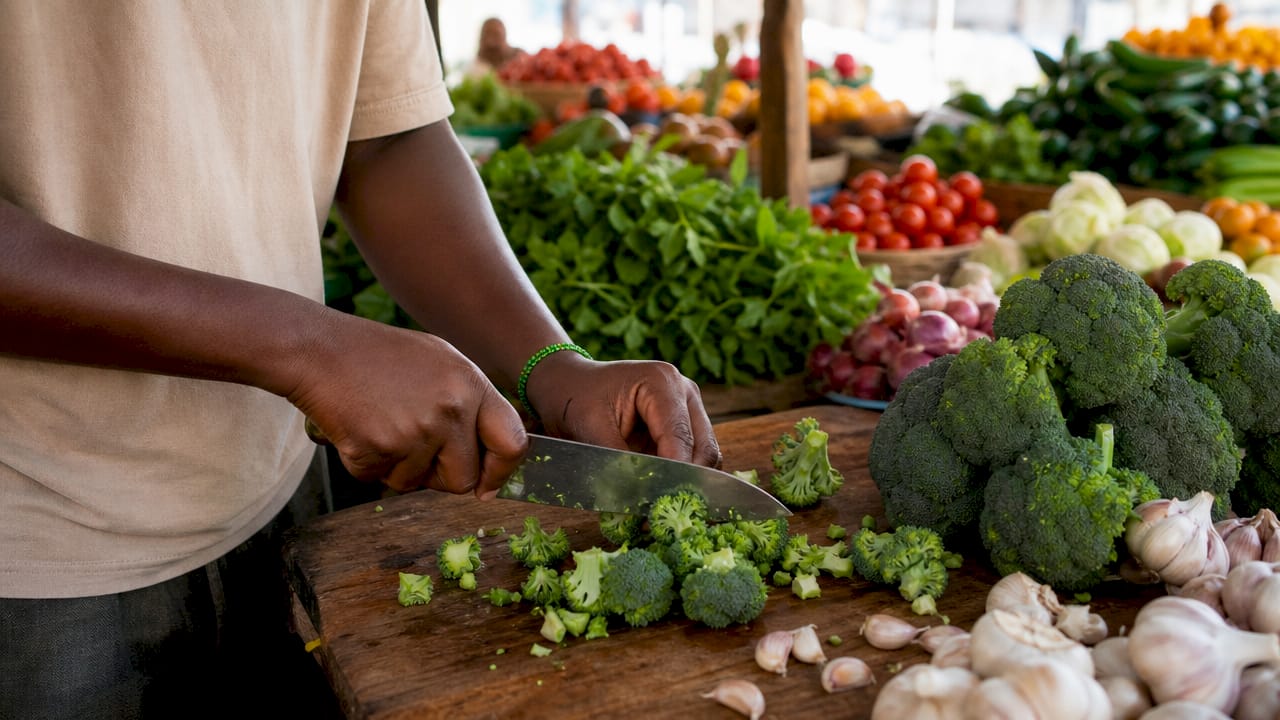
Glutathione is the liver’s most important detox molecule. Targeted liver support via sulfur-rich foods and NAC can boost glutathione production by up to 700%, clearing the toxins and hormone metabolites that directly reduce libido. That figure is not cosmetic. It means the liver can process hormone waste far more efficiently, keeping testosterone levels where they need to be for healthy sexual function.
Practical liver support includes:
- Sulfur-rich foods such as garlic, onions, broccoli, and Brussels sprouts, which feed glutathione synthesis
- N-acetyl cysteine (NAC), a supplement that directly raises glutathione levels
- B vitamins, particularly B6, B12, and folate, which support Phase 2 liver detox pathways critical for hormone metabolism
- Milk thistle (silymarin), a well-researched herb that protects liver cells and supports detox enzyme activity
Pro Tip: Add half a cup of steamed broccoli or a clove of raw garlic to your evening meal three times a week. Both are among the most concentrated dietary sources of sulforaphane, which activates the liver’s glutathione pathways within hours.
What detox methods are proven to enhance sexual health?
Evidence-backed detox for libido is not about juice fasts or extreme restriction. It targets specific biochemical pathways that govern hormone production and clearance. The most effective approaches work by removing the compounds that interfere with testosterone and oestrogen balance, while simultaneously supporting the organs responsible for hormone metabolism.
-
Chlorella and modified citrus pectin. Daily intake of 3–5g chlorella binds heavy metals in the gut and supports their elimination. Modified citrus pectin at 5g daily has been observed to reduce lead and other metals that impair hormone metabolism. Both interventions restore the conditions needed for healthy sexual function.
-
Cold exposure. Brief cold exposure of 2–3 minutes daily for six weeks has been observed to increase testosterone levels by 25% by stimulating norepinephrine and dopamine output. This is a detox-adjacent intervention: it does not remove toxins directly, but it resets the endocrine stress response that toxin overload disrupts.
-
Dietary detox through whole foods. A diet rich in cruciferous vegetables, citrus fruits, and lean protein supports both liver Phase 1 and Phase 2 detox pathways. These foods provide the cofactors the liver needs to convert fat-soluble toxins into water-soluble compounds ready for excretion.
-
Hydration and fibre. Water and dietary fibre are the simplest detox tools available. Fibre binds hormone metabolites in the gut and carries them out of the body before they can be reabsorbed. Inadequate fibre intake is one of the most common and overlooked reasons for oestrogen dominance.
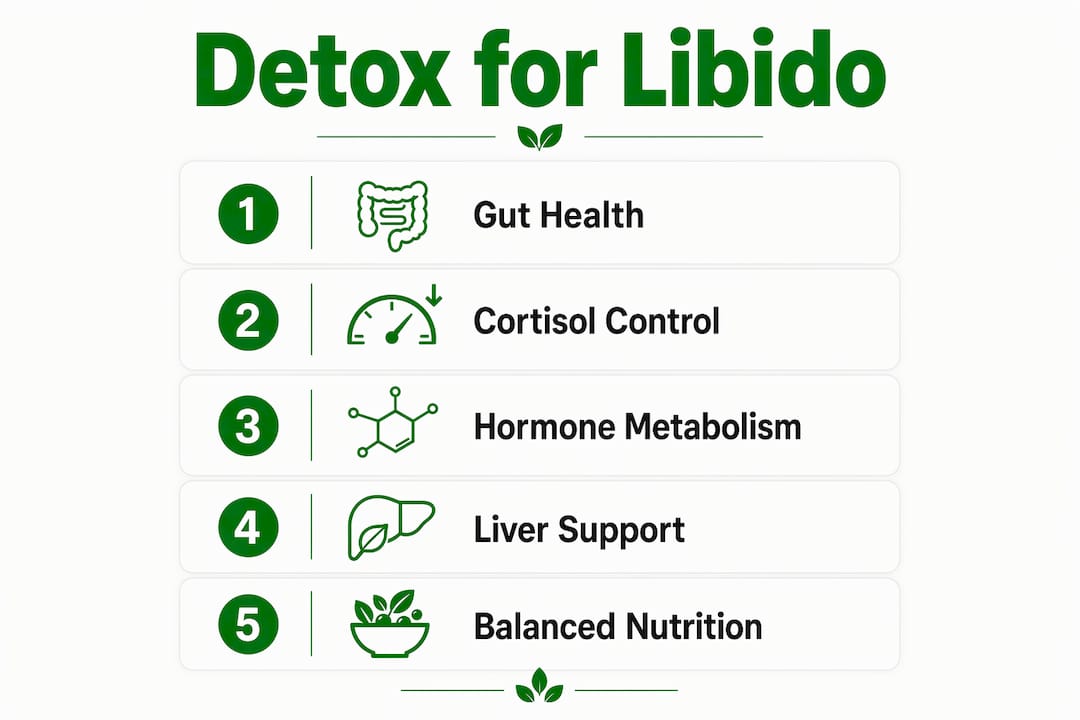
Libido is influenced by a triangle of gut health, cortisol, and hormone metabolism. Any detox approach that addresses only one of these three will deliver limited results. The most effective protocols work on all three simultaneously.
What detox mistakes can harm your sex drive?
Not all detox approaches support libido. Several popular methods actively suppress testosterone and raise cortisol, producing the opposite of the intended effect. Knowing what to avoid is as important as knowing what to do.
-
Extreme juice cleanses. Juice-only protocols strip the body of protein and fat, both of which are required for testosterone synthesis. Excessive caloric restriction elevates cortisol and suppresses the gonadotropins FSH and LH, the hormones that signal the testes to produce testosterone. The result is a measurable drop in sex drive within days.
-
Dopamine detoxing. The concept of a dopamine detox is widely misunderstood. The brain cannot actually clear dopamine through abstinence. Extreme dopamine restriction blunts the reward system, raises cortisol, and reduces the motivation and desire that underpin libido.
-
Inadequate protein intake. Testosterone is synthesised from cholesterol, and its production depends on adequate dietary fat and protein. Protein intake of 0.7–1g per pound of bodyweight protects hormone synthesis during any detox period. Dropping below this threshold while detoxing creates a hormonal deficit that takes weeks to recover.
-
Poor sleep and unmanaged stress. Cortisol and testosterone operate on a seesaw. When cortisol rises due to poor sleep or chronic stress, testosterone falls. Unmanaged stress cancels hormonal benefits even when toxin levels genuinely reduce. Sleep of seven to nine hours per night is non-negotiable during any detox protocol aimed at improving libido.
Pro Tip: During any detox period, keep a protein source at every meal. Eggs, legumes, and oily fish are ideal because they provide both protein and the healthy fats needed for testosterone production.
Does gut health affect libido through detox?
The gut plays a direct role in hormone regulation, and its connection to libido is one of the most underappreciated areas of sexual health. The gut microbiome produces an enzyme called beta-glucuronidase. When gut bacteria are out of balance, this enzyme becomes overactive and reactivates used oestrogen that the liver has already processed for elimination. The oestrogen re-enters circulation, contributing to oestrogen dominance and suppressing testosterone-driven desire.
Detoxification supports gut health by reducing the inflammatory load that disrupts the microbiome. A well-functioning gut clears hormone metabolites efficiently, preventing their reabsorption. The table below summarises the gut-libido connection and the detox interventions that address each mechanism.
| Gut factor | Effect on libido | Detox intervention |
|---|---|---|
| High beta-glucuronidase activity | Reactivates oestrogen, lowers testosterone | Increase dietary fibre; reduce processed sugar |
| Gut dysbiosis (imbalanced bacteria) | Raises systemic inflammation, disrupts hormone signalling | Probiotic-rich foods; reduce alcohol intake |
| Leaky gut (intestinal permeability) | Allows toxins into bloodstream, burdening liver | Bone broth, glutamine, fermented foods |
| Low fibre intake | Reduces hormone metabolite clearance | Aim for 30g fibre daily from whole food sources |
Fermented foods such as kefir, kimchi, and natural yoghurt support a diverse microbiome and reduce beta-glucuronidase activity. Prebiotic foods including oats, leeks, and chicory root feed the beneficial bacteria that keep hormone recycling in check. The diet and sex drive connection runs directly through the gut, making microbiome support a core part of any libido-focused detox plan.
Key takeaways
Body detox improves libido by clearing hormone metabolites through the liver and gut, restoring the testosterone and oestrogen balance that sexual desire depends on.
| Point | Details |
|---|---|
| Liver is the priority organ | Supporting glutathione production clears hormone metabolites that suppress libido. |
| Gut health drives hormone recycling | Reducing beta-glucuronidase activity prevents oestrogen reabsorption and protects testosterone levels. |
| Extreme detox backfires | Juice cleanses and caloric restriction raise cortisol and suppress the gonadotropins needed for testosterone production. |
| Protein and sleep are non-negotiable | Adequate protein and seven to nine hours of sleep protect hormone synthesis during any detox period. |
| Targeted nutrients accelerate results | Chlorella, NAC, B vitamins, and dietary fibre address the specific pathways that connect detox to sexual desire. |
Ayomide’s view: why gradual detox beats the dramatic cleanse
I have spoken with many men who arrive at the idea of detoxing for libido after trying everything else. They have tried supplements, changed their diet briefly, and wondered why nothing stuck. The pattern I see most often is this: they go too hard, too fast, and the stress of the detox itself becomes the problem.
The Ayurvedic concept of clearing “Ama” (accumulated metabolic waste) to restore natural desire resonates with me because it emphasises gentleness. Aggressive cleanses spike cortisol. Cortisol kills testosterone. The very thing you are trying to fix gets worse. What actually works is consistent, moderate support for the liver and gut over weeks, not days.
The men who see the most meaningful improvement in sexual desire are the ones who add rather than restrict. They add cruciferous vegetables, add quality protein, add sleep, and add targeted herbal support. They do not strip their diet down to juice and willpower. The ripple effect of that approach, better energy, clearer thinking, and renewed confidence, is what makes the libido improvement feel real and lasting.
— Ayomide
Gear1 and the natural path to better sexual vitality
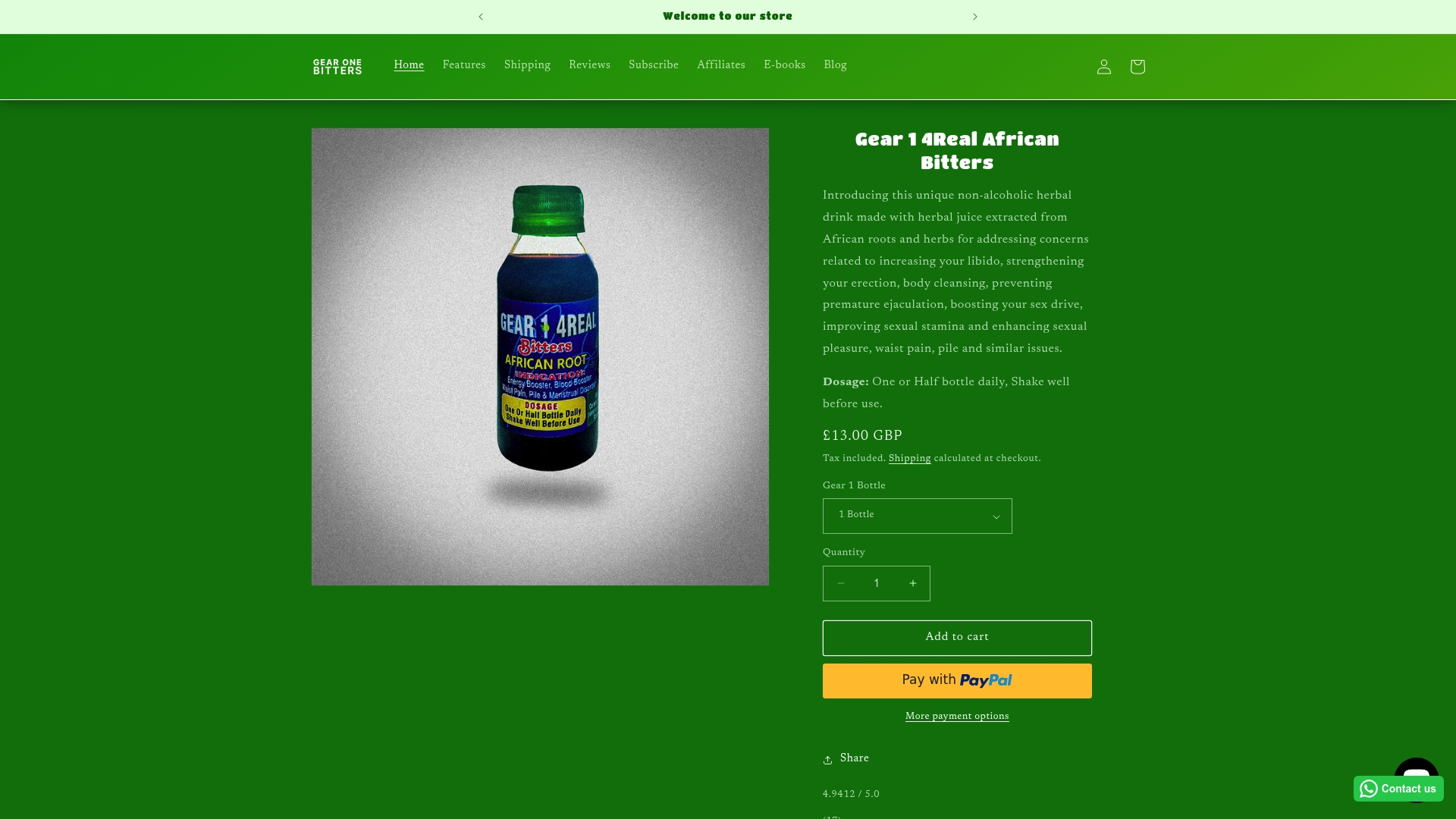
Gear1 is a non-alcoholic herbal drink made from African roots and herbs, formulated to support body cleansing, hormonal balance, and sexual vitality in one daily drink. Its herbal bitters formula works in alignment with the liver and gut detox principles covered in this article, helping to clear the internal environment that sexual desire depends on. Gear1 addresses libido, erection strength, sexual stamina, and premature ejaculation without alcohol or synthetic compounds. For men who want a practical, plant-based way to support their detox and sexual health together, the full product features are worth a look. Explore what herbal sexual enhancement drinks can do when the formula is built around real African botanicals.
FAQ
How does body detox improve libido?
Body detox improves libido by supporting the liver and gut in clearing used hormones and toxins that disrupt testosterone and oestrogen balance. When hormone metabolites are eliminated efficiently, the endocrine system can maintain the levels of testosterone needed for healthy sexual desire.
Does the liver affect sex drive?
The liver directly affects sex drive by processing and clearing oestrogen and testosterone after they have been used. An overloaded liver allows excess oestrogen to accumulate, which suppresses testosterone and reduces sexual desire.
Can a juice cleanse lower libido?
A juice-only cleanse can lower libido by restricting protein and calories to levels that raise cortisol and suppress the gonadotropins FSH and LH. These hormones signal testosterone production, so suppressing them causes a measurable drop in sex drive.
What is the gut’s role in sexual desire?
The gut regulates hormone recycling through the enzyme beta-glucuronidase, which can reactivate processed oestrogen and return it to circulation. Detox practices that support a healthy gut microbiome reduce this reactivation and protect testosterone-driven desire.
Which nutrients support detox for libido?
Glutathione precursors such as NAC, B vitamins, dietary fibre, and sulfur-rich foods are the most important nutrients for libido-focused detox. These compounds support the liver’s hormone clearance pathways and the gut’s ability to eliminate hormone metabolites before reabsorption occurs.
Recommended
- How to increase male libido naturally: 2026 guide – Gear 1 4Real African Bitters
- How herbal libido boosters work: a 2026 guide – Gear 1 4Real African Bitters
- Herbal boost for bedroom passion: a complete guide – Gear 1 4Real African Bitters
- What is male libido? A complete guide for men – Gear 1 4Real African Bitters
About Gear 1 4Real African Bitters — a non-alcoholic herbal bitters made from African root and herb extracts, blended to a traditional recipe rooted in generations of use. See the product and full ingredients list.
Food supplement. Not intended to diagnose, treat, cure or prevent any disease.