
Herbal libido boosters are defined as plant-derived compounds that influence sexual desire and function by modulating multiple physiological pathways simultaneously. Unlike pharmaceutical options, which typically target a single mechanism, these botanicals act across vascular, hormonal, neurological, and stress-response systems at once. Herbs such as ashwagandha, damiana (Turnera diffusa), and nettle have moved from traditional use into clinical research, with randomised controlled trials now validating some of their effects. Understanding how herbal libido boosters work gives you a realistic picture of what to expect, how long results take, and why some products deliver while others disappoint.
What biological pathways do herbal libido boosters influence?
Multi-pathway modulation is the most biologically plausible model for effective herbal libido boosters, rather than single-target effects. Sexual function depends on at least four overlapping systems, and the most credible botanicals touch more than one of them. This is why the science behind natural aphrodisiacs differs fundamentally from how a drug like sildenafil works.
Vascular and nitric oxide pathways
Penile erection begins with nitric oxide (NO) release, which relaxes smooth muscle and increases blood flow to genital tissue. Endothelial dysfunction impairs NO bioavailability, reducing the quality and firmness of erections. Herbs that support NO production or protect endothelial cells therefore address one of the root causes of poor erectile function. This vascular pathway is also relevant for women, where genital blood flow influences arousal and lubrication.
Stress-axis modulation by adaptogens
Chronic stress raises cortisol, which suppresses testosterone production and reduces sexual motivation. Adaptogenic herbs such as ashwagandha (Withania somnifera) lower cortisol and regulate the hypothalamic-pituitary-adrenal axis. The result is not a sudden surge in desire but a gradual restoration of the hormonal environment that supports it. This is why adaptogen-based supplements tend to show their clearest benefits over four to eight weeks rather than overnight.
Neurotransmitter and arousal effects
Dopamine drives sexual motivation and reward, while elevated serotonin can suppress libido. Some botanicals appear to modulate these neurotransmitter balances, supporting arousal without the blunting effect associated with certain antidepressants. The mechanisms here are less well characterised than the vascular pathway, but they are consistent with the mood and desire improvements reported in clinical trials.
Hormonal and micronutrient support
Several herbs influence androgen and oestrogen balance, either by supporting testosterone production directly or by inhibiting aromatase, the enzyme that converts testosterone to oestrogen. Zinc, found in many herbal formulations, is a cofactor in testosterone synthesis. Herbal supplements for libido that contain hormone-active compounds should be treated with the same caution as medications, particularly for individuals with hormone-sensitive conditions.
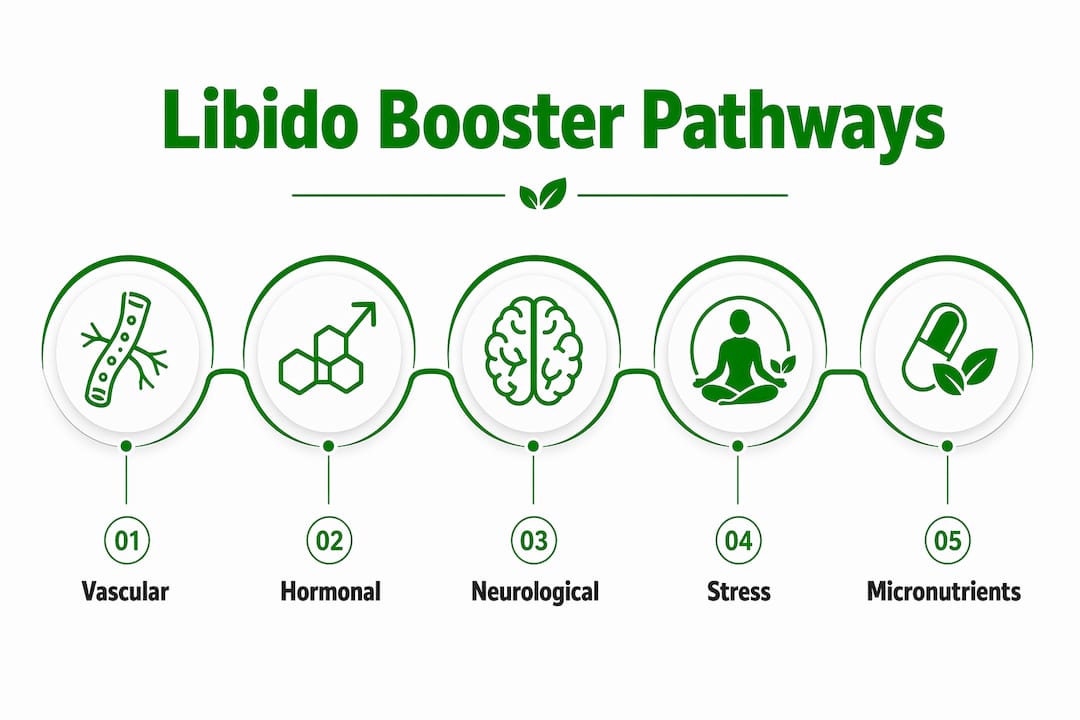
Pro Tip: If you are evaluating a herbal supplement, look for one that addresses at least two of these pathways. A product targeting only one mechanism is less likely to produce meaningful results for most users.
Which herbs have the strongest evidence for libido enhancement?
The evidence base for herbal libido enhancement varies considerably by herb. Some have robust clinical trial data; others have compelling mechanistic research but limited human studies. Understanding the difference between mechanism plausibility and clinical confirmation protects you from overpromising products.
Ashwagandha (Withania somnifera)
Ashwagandha is currently the most clinically validated herbal libido booster for men. An RCT with 76 men aged 30 to 50 found that 300 mg twice daily for 8 weeks produced a 36% increase in ejaculate volume, a 38% increase in sperm count, and an 87% increase in sperm motility, with no adverse effects. Sexual desire and erectile function also improved significantly. These results suggest ashwagandha acts across multiple layers: erection biology, sex-drive neurobiology, and reproductive health. That breadth of effect is unusual for a single botanical.
Damiana (Turnera diffusa)
Damiana is a flavonoid-rich herb with a long history of use as a natural aphrodisiac. In vitro research shows that damiana extract modulates NO-cGMP, PDE5, and aromatase pathways simultaneously, without cytotoxicity. This makes it a low-intensity multi-target physiological modulator, which is a meaningful distinction from pharmaceutical PDE5 inhibitors that block the enzyme completely. Clinical confirmation in humans is still pending, so damiana’s evidence sits at the mechanistic rather than the proven-efficacy level for now.
Nettle (Urtica dioica)
Nettle capsules at 500 mg daily showed statistically significant improvements in sexual desire and satisfaction in postmenopausal women within four weeks in an RCT of 60 participants. The proposed mechanism involves sex hormone-binding globulin (SHBG) modulation, which may increase the availability of free testosterone. The relatively rapid onset, within four weeks, makes nettle one of the faster-acting herbal options in the clinical literature.
Other herbs with preliminary evidence
Panax ginseng, Tribulus terrestris, and maca each have supportive evidence, particularly at early or mild stages of sexual dysfunction. Ginseng’s ginsenosides promote NO synthesis; Tribulus may support luteinising hormone activity; maca appears to work through non-hormonal pathways that are not yet fully understood. None of these have the depth of evidence that ashwagandha currently holds.
| Herb | Primary mechanism | Evidence strength | Typical timeline |
|---|---|---|---|
| Ashwagandha | Adaptogenic, androgen-modulating, NO support | Strong (RCT in men) | 4 to 8 weeks |
| Damiana | PDE5 modulation, aromatase inhibition, NO | Moderate (in vitro only) | Unknown clinically |
| Nettle | SHBG modulation, free testosterone support | Moderate (RCT in women) | 4 weeks |
| Panax ginseng | NO synthesis via ginsenosides | Preliminary (mixed RCTs) | 4 to 8 weeks |
| Tribulus terrestris | LH activity, androgen support | Weak to moderate | 4 to 12 weeks |
| Maca | Non-hormonal, possibly neurological | Preliminary | 6 to 12 weeks |
Pro Tip: When reading about any herbal remedy for low libido, check whether the evidence comes from in vitro studies, animal models, or human RCTs. Only the last category tells you what will actually happen in your body.
What do clinical trials tell us about timelines and effectiveness?
Clinical trials for botanicals typically show changes in desire or satisfaction within four to eight weeks, while reproductive parameter effects such as semen quality may require longer. This distinction matters because many users abandon a supplement after two weeks and conclude it does not work, when the biological process simply needs more time.
The ashwagandha trial showed improvements in both desire and semen metrics over eight weeks, confirming that multi-layer botanical impact is real but not instantaneous. Nettle produced desire improvements within four weeks, suggesting that SHBG-mediated effects on free testosterone can occur relatively quickly. These timelines give you a practical framework for evaluating whether a product is working.
Safety profiles across these trials are reassuring. Neither ashwagandha nor nettle produced serious adverse events at standard doses. That said, the following points deserve attention before you start any herbal supplement:
- Herbal supplements can interact with medications including anticoagulants, antidepressants, and hormone therapies.
- Products that contain undisclosed hormonal compounds should be avoided entirely.
- Placebo effects are real and account for a meaningful portion of reported improvements in desire-related outcomes.
- Longer-term data beyond twelve weeks is limited for most botanicals, so durability of effects remains an open question.
- Nutraceuticals play a supportive role in mild erectile dysfunction but are not first-line treatments for moderate to severe cases, where PDE5 inhibitors remain the clinical standard.
The honest picture is that herbal libido boosters produce moderate, real effects in many users, particularly those with mild dysfunction or stress-related low desire. They are not a replacement for medical treatment when dysfunction is significant.
Practical considerations before using herbal libido boosters
Product quality is the single biggest variable between a supplement that works and one that does not. Many libido supplements lack sufficient dosing or standardisation, which means the active compounds may be present in quantities too low to produce any effect. Always look for products that specify the extract ratio or standardised percentage of key actives.
Libido is multi-factorial. Relationship quality, sleep, mental health, and physical fitness all influence sexual desire independently of any supplement. A herbal booster works best as an adjunct to these foundations, not a substitute for them. If low libido is persistent and accompanied by fatigue, mood changes, or other symptoms, a GP consultation is the right first step.
- Choose products with clearly stated extract standardisation and dosage per serving.
- Allow a minimum of four weeks before assessing whether a product is producing any effect.
- Disclose all supplements to your doctor if you take prescription medications, particularly anticoagulants or hormone therapies.
- Avoid products that make claims about “instant results” or that list proprietary blends without individual ingredient doses.
- Combine herbal supplementation with adequate sleep, stress management, and regular physical activity for the best outcomes.
Pro Tip: If you want to explore African herbal traditions for libido support, look for formulations that draw on documented root and herb extracts rather than generic “herbal blend” labels. Specificity is a sign of quality.
Key takeaways
Herbal libido boosters work by modulating vascular, hormonal, stress-response, and neurotransmitter pathways simultaneously, producing moderate but real improvements in desire, satisfaction, and reproductive health over four to eight weeks.
| Point | Details |
|---|---|
| Multi-pathway action | Effective botanicals target vascular, hormonal, and neurological systems at once, not a single mechanism. |
| Ashwagandha leads the evidence | RCT data shows significant improvements in desire, erectile function, and semen quality over eight weeks. |
| Timelines vary by outcome | Desire and satisfaction may improve within four weeks; reproductive metrics take longer. |
| Quality and standardisation matter | Products without stated extract standardisation are unlikely to deliver consistent results. |
| Herbal boosters are adjuncts | They support sexual health best alongside good sleep, stress management, and physical activity. |
Why I think most people misunderstand herbal libido boosters
By Ayomide
Most of the frustration I hear about herbal supplements comes from one misunderstanding: people expect them to work like a pharmaceutical drug, fast and singular in effect. That is not how these compounds work, and it is not how the body works either.
What genuinely impresses me about the current research is the multi-target picture. Damiana acting on PDE5, aromatase, and nitric oxide simultaneously is not a marketing claim. It is what the mechanistic data shows. Ashwagandha improving both desire and semen parameters in the same eight-week trial tells you something important: these herbs are working at a systems level, not just masking a symptom.
Where I urge caution is with products that hide behind vague “proprietary blend” labels. The clinical trials that produced meaningful results used specific doses of standardised extracts. A supplement that cannot tell you how much active compound it contains is not following the science, regardless of what the label promises.
The most honest advice I can offer is this: herbal libido boosters are real, they work for many people, and they work best when you give them time and pair them with the lifestyle factors that support sexual health. Go ahead and explore natural herbs for sex drive with confidence, but do so with clear expectations and quality products.
— Ayomide
Discover Gear1: herbal support rooted in African tradition
Gear1 4Real is a non-alcoholic herbal drink formulated from African roots and herbs, designed to support libido, strengthen erections, improve sexual stamina, and address premature ejaculation. The formulation draws on the same multi-pathway principles discussed throughout this article: vascular support, hormonal balance, and stress modulation through plant-based compounds.
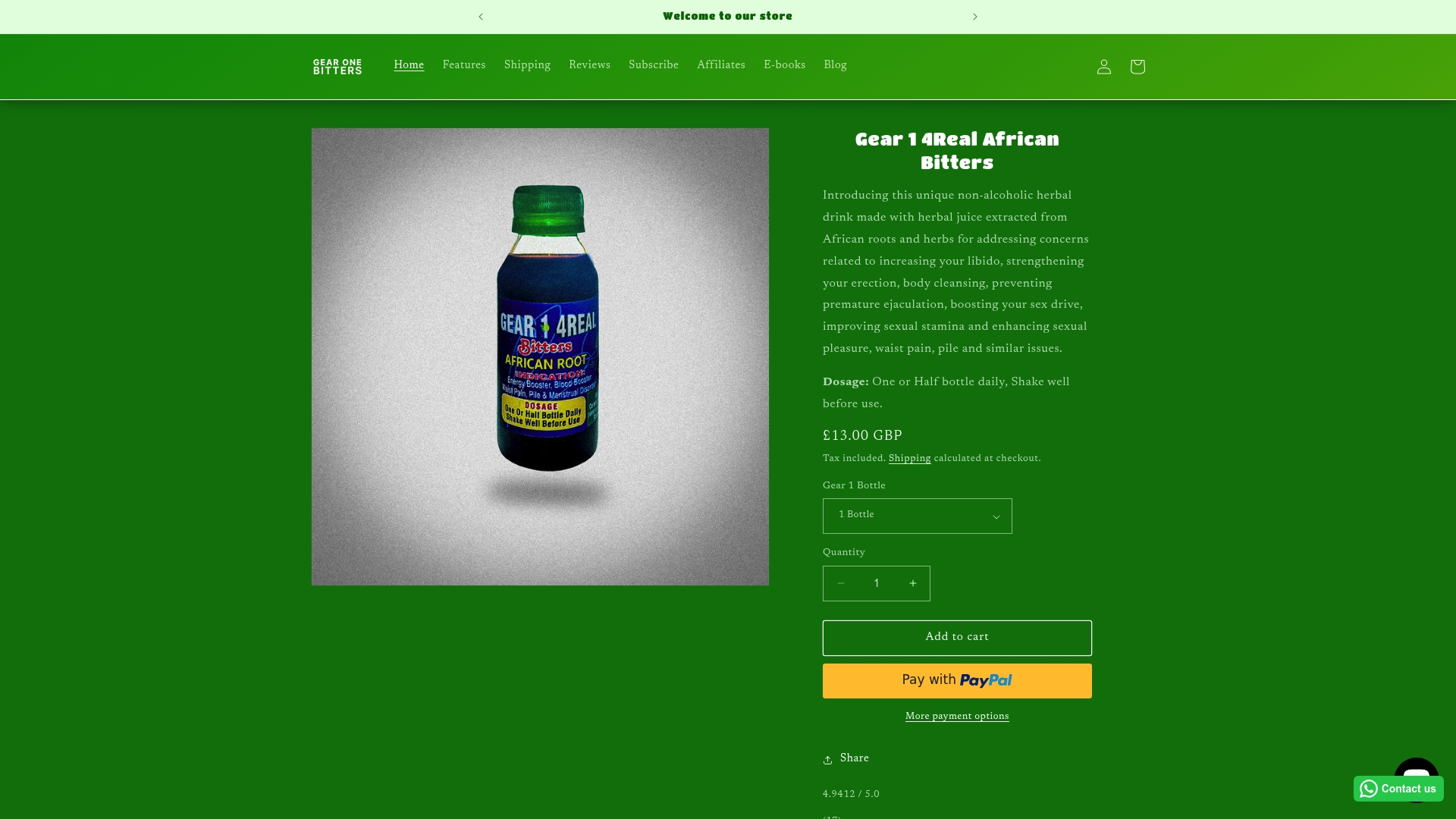
If you are ready to take a practical step towards natural libido enhancement, exploring the Gear1 4Real ingredients gives you a transparent look at what is in the formula and why each component is included. For a broader view of how the product supports sexual health, the sex drive features page outlines the specific benefits in plain language. Gear1 is built for men who want real results from real herbs.
FAQ
What does “herbal libido booster” actually mean?
A herbal libido booster is any plant-derived supplement formulated to improve sexual desire, arousal, or performance by acting on biological pathways such as nitric oxide production, hormone balance, or stress regulation. The term covers a wide range of botanicals, from ashwagandha and damiana to nettle and Panax ginseng.
How long does it take for herbal libido supplements to work?
Clinical trials show that desire and satisfaction improvements can appear within four weeks, while changes in reproductive metrics such as sperm quality may take eight weeks or longer. Giving any herbal supplement at least four weeks before evaluating its effect is the evidence-based approach.
Are herbal libido boosters safe to use daily?
Most well-studied botanicals, including ashwagandha and nettle, show no serious adverse effects at standard doses in clinical trials. However, interactions with prescription medications are possible, so disclosing any supplement to your doctor is advisable, particularly if you take anticoagulants or hormone therapies.
Do herbal libido boosters work the same way as Viagra?
No. Pharmaceutical PDE5 inhibitors like sildenafil block a single enzyme completely and act within an hour. Herbal botanicals such as damiana modulate PDE5 expression moderately alongside other pathways, producing gentler, cumulative effects over weeks rather than acute responses within hours.
What makes some herbal libido supplements more effective than others?
Standardised extract concentration and correct dosage are the primary factors. Products that specify the active compound percentage and match doses used in clinical research are far more likely to produce results than those using generic blends without disclosed quantities.
Recommended
- Herbal boost for bedroom passion: a complete guide – Gear 1 4Real African Bitters
- How African herbs boost libido: a 2026 guide – Gear 1 4Real African Bitters
- Herbal roots for male libido: top 6 proven options – Gear 1 4Real African Bitters
- Natural herbs boosting sex drive: 9 proven options – Gear 1 4Real African Bitters
About Gear 1 4Real African Bitters — a non-alcoholic herbal bitters made from African root and herb extracts, blended to a traditional recipe rooted in generations of use. See the product and full ingredients list.
Food supplement. Not intended to diagnose, treat, cure or prevent any disease.