
A short, practical plan combining whole-food plant-based eating, relationship work, and targeted lifestyle changes can meaningfully raise desire for many adults — provided physical causes are ruled out first. Mayo Clinic guidance is clear that low libido is usually multi-factorial, and the most effective approach targets several causes at once rather than relying on a single food or supplement.
Here is what to try first:
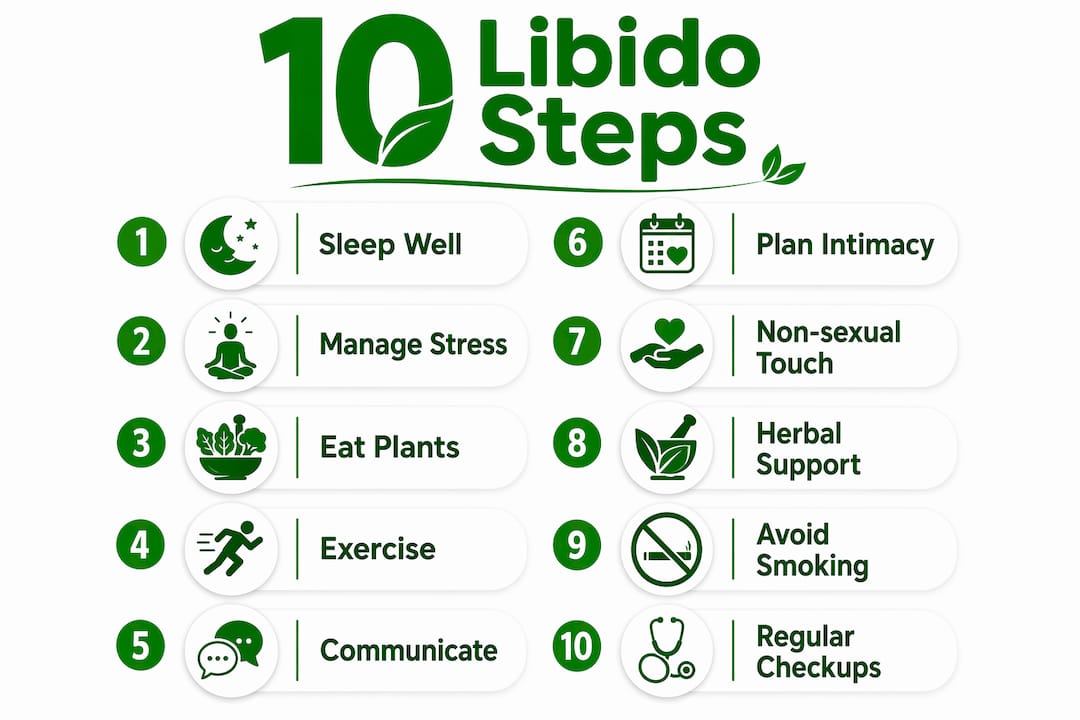
- Swap processed foods for whole-plant meals — leafy greens, legumes, nuts, seeds, and whole grains support blood flow and hormonal balance.
- Have one honest conversation with your partner this week — naming what you need is often faster than any supplement.
- Prioritise 7–9 hours of sleep — sleep debt suppresses testosterone and reduces desire in both men and women.
- Cut alcohol to within NHS guidelines (14 units per week maximum) and stop smoking if you do.
- Try one cautious herbal option at a time — maca or Panax ginseng are the best-evidenced starting points; never stack multiple botanicals.
- Book a GP appointment if low desire has lasted more than a few weeks, affects your wellbeing, or comes with other symptoms.
- Ask your GP about NHS psychosexual therapy — it is available by referral and typically runs for up to six sessions.
Safety note: Herbal supplements are largely unregulated in the UK. Mayo Clinic advises discussing any herbal product with a healthcare professional before use because of interaction and side-effect risks. This article is general information, not medical advice — confirm your own situation with a GP or qualified clinician.
Table of Contents
- What actually causes low libido? A quick self-assessment
- Relationship and intimacy strategies that reliably help libido
- How stress and sleep affect your desire (and what to do tonight)
- Exercise, alcohol, smoking, and weight: the lifestyle levers that matter most
- Plant-based foods that support sexual health: what the evidence says
- Herbs and supplements: what the evidence actually shows
- Men, women, and menopause: causes and first steps differ
- When to see your GP and what to expect from NHS services
- A practical 4-week plant-based trial plan
- Key takeaways
- What I would actually do first if a client came to me with low libido
- Gear1: a plant-based herbal option worth knowing about
- Useful sources and further reading
What actually causes low libido? A quick self-assessment
Low desire rarely has a single cause. Understanding the likely driver helps you choose the right plant-based or relationship step rather than chasing the wrong fix.
Physical causes:
- Low testosterone or oestrogen (hormonal imbalance)
- Thyroid dysfunction (both hypo- and hyperthyroidism)
- Chronic pain, pelvic floor issues, or vaginal dryness
- Cardiovascular disease or diabetes affecting blood flow
- Obesity or significant unintentional weight loss
Medication-related causes:
- Antidepressants (particularly SSRIs such as sertraline and fluoxetine)
- Antihypertensives, especially beta-blockers
- Hormonal contraceptives in some people
- Opioid pain relief taken long-term
Psychological and relational causes:
- Anxiety, depression, or unresolved trauma
- Relationship conflict, poor communication, or loss of emotional closeness
- Performance pressure or body-image concerns
- Grief, burnout, or major life transitions
Lifestyle causes:
- Poor sleep or untreated insomnia
- Heavy alcohol use or tobacco smoking
- High chronic stress and low recovery time
Causes in the physical and medication columns generally need GP investigation. Lifestyle and relational causes are where plant-based and behavioural steps make the biggest difference.
Pro Tip: Before your GP appointment, keep a two-week log noting your sleep hours, alcohol units, stress level out of ten, and any days when desire felt higher or lower. That pattern is far more useful to a clinician than a vague “it’s been low for a while.”
Relationship and intimacy strategies that reliably help libido
Relationship work often improves desire faster than any supplement, because psychological safety and emotional closeness are primary drivers of desire for most people. Start here before reaching for a herb.
1. Use a communication script starter. Say: “I’ve noticed I feel closer to you when we [specific action]. Can we try more of that?” Framing desire as a shared goal rather than a complaint reduces defensiveness and opens dialogue.

2. Schedule intimacy without pressure. Planned connection time removes the anxiety of “will tonight be the night?” A scheduled hour together — with no obligation beyond closeness — often reignites spontaneous desire within a few weeks.
3. Try sensate focus across two sessions. In session one (day one or two), take turns touching non-genital areas with no goal other than noticing sensation. In session two (three or four days later), expand the area slightly. This technique, developed by Masters and Johnson, reduces performance pressure and rebuilds physical trust.
4. Prioritise non-sexual foreplay throughout the day. Brief physical affection — a hand on the shoulder, a genuine compliment, a shared laugh — builds the emotional bank account that desire draws from later.
If these steps feel stuck after four to six weeks, or if there is significant conflict or past trauma involved, a referral to a sex therapist or couples counsellor is the sensible next move. NHS psychosexual therapy is available via GP referral and uses a short-term psychological model, typically a short course of sessions after physical causes have been excluded.
Pro Tip: Healthline research highlights that building intimacy and reducing stress are central to improving libido — so treat relationship steps as medicine, not as optional extras.
How stress and sleep affect your desire (and what to do tonight)
Reducing chronic stress and improving sleep quality can restore desire for many people without a single dietary change. Mental load is one of the most modifiable drivers of low libido, and it is frequently underestimated.
Sleep hygiene checklist:
- Set a consistent wake time, even at weekends
- Keep the bedroom cool, dark, and free of screens for 30 minutes before sleep
- Avoid caffeine after 2 PM and alcohol within three hours of bed
- If you wake and cannot sleep, leave the room rather than lying awake
Quick stress-reduction techniques:
- Diaphragmatic breathing: four seconds in through the nose, hold for four, six seconds out through the mouth — repeat five times
- A ten-minute mindfulness body scan before bed (free on the NHS-recommended Headspace or Calm apps)
- A firm “shutdown ritual” at the end of the working day — close the laptop, write tomorrow’s top three tasks, and physically leave the workspace
Key finding: Research consistently links stress and poor sleep to suppressed testosterone and reduced sexual desire in both men and women. Cortisol, the primary stress hormone, directly inhibits testosterone production when chronically elevated.
Pro Tip: A 20-minute nap between 1 PM and 3 PM can reduce afternoon cortisol and improve evening mood and energy — both of which feed into desire. Keep it under 30 minutes to avoid sleep inertia.

Exercise, alcohol, smoking, and weight: the lifestyle levers that matter most
Regular exercise and reducing smoking and alcohol have measurable, well-documented effects on sexual function, confidence, and vascular health. These are not soft suggestions.
Exercise:
- Aim for 150 minutes of moderate aerobic activity per week (brisk walking, cycling, swimming) — this supports cardiovascular health, which directly underpins erectile function and arousal
- Add two strength sessions per week; resistance training supports testosterone levels in men and improves body confidence in both sexes
- Pelvic floor exercises (Kegel contractions) improve blood flow to the genitals and can reduce premature ejaculation and improve orgasm intensity
Alcohol:
- The NHS recommends limiting alcohol intake to moderate levels and spreading consumption across several days
- Even moderate regular drinking reduces testosterone and disrupts REM sleep, both of which suppress desire
- Expect noticeable improvement in energy and libido within two to four weeks of cutting back
Smoking:
- Tobacco damages vascular endothelium, reducing blood flow to sexual organs; this is a direct cause of erectile dysfunction in men
- NHS Stop Smoking services (available via your GP or online at nhs.uk) significantly improve quit rates compared with willpower alone
Realistic timelines: Most people notice improved energy and mood within two to three weeks of consistent exercise and reduced alcohol. Vascular improvements from stopping smoking take longer — typically three to six months — but sexual function often improves before that.
Plant-based foods that support sexual health: what the evidence says
A healthy whole-food plant-based pattern supports sexual health through three main pathways: vascular (blood flow), metabolic (hormonal balance and insulin sensitivity), and mood (serotonin and dopamine precursors). Processed plant foods — vegan ready meals, refined carbohydrates, plant-based junk food — do not carry these benefits. Prospective data shows a healthy plant-based diet index is inversely associated with erectile dysfunction in men aged 60–70, while unhealthy plant-based patterns may increase risk in younger men.
No single food has been proven to directly stimulate sexual organs. As WebMD notes, aphrodisiac foods more often support mood and physiological states that influence desire indirectly. Think of food as infrastructure, not ignition.
| Food group | Key examples | Mechanism |
|---|---|---|
| Leafy greens | Spinach, rocket, watercress | High in nitrates; converted to nitric oxide, which dilates blood vessels |
| Legumes | Lentils, chickpeas, black beans | Zinc and folate support testosterone production and sperm quality |
| Nuts and seeds | Walnuts, pumpkin seeds, flaxseed | Omega-3 fatty acids and arginine support blood flow and hormone synthesis |
| Dark chocolate (70%+) | Cacao-rich bars | Flavonoids improve endothelial function; small mood lift via phenylethylamine |
| Beetroot | Whole beets, unsweetened juice | Concentrated dietary nitrates; well-studied for vascular dilation |
| Whole grains | Oats, quinoa, brown rice | B vitamins support adrenal and nervous system function |
| Cruciferous vegetables | Broccoli, Brussels sprouts, kale | Indole-3-carbinol supports oestrogen metabolism |
A simple meal example: Lentil and spinach dahl with brown rice and a side of roasted beetroot. This single meal delivers nitrates, zinc, folate, B vitamins, and plant-based omega-3 precursors — the full vascular and hormonal support stack in one bowl.
Pro Tip: Think in patterns, not superfoods. A checklist approach works well: aim for at least three colours of vegetables daily, one legume serving, one handful of nuts or seeds, and one whole grain. That structure is more sustainable than hunting for a single “libido food.”
Herbs and supplements: what the evidence actually shows
Some herbs have limited but real evidence; others are mostly folklore. Treat all of them as pharmacological exposures, not food. A PMC review of herbal sexual enhancers warns explicitly of adverse effects, lack of standardisation, and drug interactions — the same review that underpins NHS caution in this area.
| Herb / supplement | Evidence summary | Common forms | Key cautions |
|---|---|---|---|
| Maca (Lepidium meyenii) | Small human trials suggest modest improvement in self-reported libido; no clear hormonal mechanism confirmed | Powder, capsule | Generally well tolerated; avoid in hormone-sensitive conditions |
| Panax ginseng | Reasonable evidence for erectile function; works partly via nitric oxide synthesis in penile tissue | Standardised extract, capsule | Interacts with warfarin, stimulants, and MAOIs; may raise blood pressure |
| Ginkgo biloba | Mixed evidence; some benefit for SSRI-induced sexual dysfunction | Standardised extract | Significant interaction with anticoagulants (warfarin, aspirin); avoid pre-surgery |
| L-arginine | Amino acid precursor to nitric oxide; modest evidence for mild ED when combined with other agents | Powder, capsule | Can interact with PDE5 inhibitors; avoid with herpes history |
| Tribulus terrestris | Animal studies positive; human evidence weak — research suggests it does not reliably raise testosterone in healthy men | Capsule | Liver toxicity reported at high doses |
| Yohimbine | Some evidence for ED; narrow therapeutic window | Capsule | Raises blood pressure and heart rate; contraindicated in anxiety disorders, hypertension |
UK availability note: Most of these are sold as food supplements in the UK and are not regulated as medicines by the MHRA. That means potency, purity, and dosage can vary significantly between brands. Look for products with third-party testing certification (e.g., Informed Sport or NSF).
Safety rules:
- Try one botanical at a time, for a defined period (four weeks maximum before reassessing)
- Always check interactions if you take antidepressants, blood thinners, antihypertensives, or hormone therapies
- Stop immediately if you notice palpitations, rashes, digestive distress, or mood changes
For a deeper look at how specific herbal libido boosters work and their mechanisms, the Gear1 blog covers the pharmacology in accessible terms.
Pro Tip: Never stack multiple botanicals simultaneously. If something goes wrong, you will have no way of knowing which herb caused it — and some combinations (ginkgo plus ginseng, for example) amplify anticoagulant effects unpredictably.
Men, women, and menopause: causes and first steps differ
Libido is influenced by hormones, neurotransmitters, psychosocial factors, and physical aspects — and how these interact varies significantly by sex and life stage. A one-size-fits-all approach misses the point.
For men:
- Rule out erectile dysfunction as a separate issue — ED and low libido often coexist but have different causes
- Request a morning serum testosterone test if you have fatigue, reduced muscle mass, or mood changes alongside low desire
- Assess cardiovascular risk: ED is often an early warning sign of vascular disease
- Consider whether antidepressants or antihypertensives are contributing; discuss switching with your GP before stopping anything
For women:
- Low desire is usually multi-factorial — hormones, relationship quality, pain, and mental health all interact
- Genitourinary syndrome of menopause (GSM) causes vaginal dryness and discomfort that directly reduces desire; topical oestrogen is highly effective and available on NHS prescription
- HRT (hormone replacement therapy) can restore libido significantly in perimenopausal and postmenopausal women; discuss risks and benefits with your GP
- Younger women: consider whether hormonal contraception is a factor — some people experience reduced desire on combined pills; a progestogen-only or non-hormonal option may help
For younger adults generally:
- Psychological causes (anxiety, depression, relationship conflict) and medication side effects are the most common drivers
- A GP referral for talking therapy or psychosexual counselling is often more effective than any supplement
When to test — a quick checklist:
- Thyroid function (TSH, free T4) — rules out hypo/hyperthyroidism
- Fasting glucose or HbA1c — screens for diabetes
- Testosterone (morning sample) — relevant for men with fatigue and mood changes
- Prolactin — elevated levels suppress libido in both sexes
- Basic gynaecological assessment for women with pain or dryness
When to see your GP and what to expect from NHS services
See your GP when low desire affects your wellbeing, lasts more than a few weeks, or comes alongside other symptoms. Do not wait for it to resolve on its own if it is causing distress.
Immediate red flags — see a GP promptly:
- Sudden loss of libido with no obvious cause
- Low desire alongside fatigue, unexplained weight change, or mood disorder
- Pain during sex that is new or worsening
- Erectile dysfunction that is persistent rather than occasional
Routine tests your GP may request:
- Thyroid function, fasting glucose/HbA1c, full blood count
- Testosterone (morning sample, men and some women)
- Prolactin, LH, FSH where hormonal imbalance is suspected
- Blood pressure and cardiovascular risk assessment
NHS psychosexual therapy pathway: Your GP can refer you directly. NHS psychosexual therapy uses a brief psychological model — typically a short course of therapy sessions — and requires that physical causes have been excluded or are being managed first. Waiting times vary by region; ask your GP about local services or whether a self-referral route exists in your area.
Pro Tip: Print or screenshot the two-week symptom log you kept (from the causes section above) and bring it to your appointment. GPs have limited consultation time — arriving with a clear pattern saves both of you time and leads to faster, more targeted investigation.
A practical 4-week plant-based trial plan
A focused four-week trial combining diet, one relationship exercise weekly, improved sleep, and a single cautious herbal test is a pragmatic way to evaluate whether combined changes make a meaningful difference for you.
Week by week:
-
Week 1 — Foundation. Overhaul one meal per day to a whole-plant template (see the lentil dahl example above). Set a consistent sleep and wake time. Have one intentional conversation with your partner using the communication script from section three.
-
Week 2 — Movement and stress. Add three 30-minute aerobic sessions. Begin the diaphragmatic breathing practice each evening. Try sensate focus session one with your partner.
-
Week 3 — Cautious herbal trial. If you have checked for interactions with any current medication, introduce one botanical (maca powder is the lowest-risk starting point — one teaspoon in a smoothie daily). Continue diet and sleep habits. Try sensate focus session two.
-
Week 4 — Assess and decide. Score your mood, sleep quality, and intimacy frequency against your week-one baseline. If you notice improvement, continue. If not, or if you have experienced any side effects, stop the herbal trial and book a GP appointment.
Simple tracking template (score each daily):
- Mood: 1–10
- Sleep hours: actual number
- Libido: 1–10
- Intimacy contact (yes/no)
- Herbal supplement taken (yes/no, any side effects)
Safety checklist before starting:
- Check all current medications for interactions with your chosen botanical (use the NHS medicines interactions checker or ask a pharmacist)
- Do not start a herbal trial if you are pregnant, breastfeeding, or have a hormone-sensitive condition
- Stop the herbal element immediately if you notice palpitations, rashes, or mood changes
- If your baseline scores do not improve after four weeks, book a GP appointment rather than adding more supplements
Key takeaways
A multi-domain plan combining whole-food plant-based eating, relationship work, sleep, stress reduction, and cautious herbal use is the most effective approach to low libido for most adults.
| Point | Details |
|---|---|
| Start with relationship work | Communication and intimacy exercises often improve desire faster than any dietary change. |
| Eat whole-plant, not processed-plant | Healthy plant-based patterns support vascular and hormonal health; processed plant foods do not carry the same benefit. |
| Sleep and stress first | Chronic stress elevates cortisol, which directly suppresses testosterone and desire in both men and women. |
| One herb at a time, safely | Try a single botanical for four weeks maximum; check interactions with all current medications before starting. |
| See your GP if in doubt | Persistent low libido warrants thyroid, glucose, and testosterone testing; NHS psychosexual therapy is available by GP referral. |
| Gear1 as a cautious adjunct | Gear1’s African herbal bitters offer a plant-based option to support libido alongside lifestyle and medical steps, not as a replacement for them. |
What I would actually do first if a client came to me with low libido
The conventional wisdom in wellness circles is to reach for a supplement first. That instinct is understandable, but it is usually backwards. When someone comes to me with low desire, my first question is never “what are you eating?” It is “what is happening in your relationship and your sleep?”
The evidence is consistent: behavioural and relational steps are first-line. Diet and supplements are supportive measures. That ordering matters enormously in practice, because someone who starts with a herbal supplement and sees no result often concludes that “nothing works” — when the real issue was unaddressed relationship conflict or a thyroid problem that needed a blood test.
My stepwise approach would be: assess physical causes first (GP visit, basic bloods), then address sleep and stress (the fastest wins), then introduce relationship exercises, then layer in whole-food plant-based dietary changes, and only then — if everything else is in place — consider a cautious single-botanical trial. That sequence is not arbitrary. It moves from highest-evidence to lowest-evidence, and from lowest-risk to highest-risk.
What I find most people underestimate is how quickly relationship-quality interventions work. Two weeks of intentional communication and sensate focus can shift desire more than three months of maca powder. The ripple effect of feeling genuinely seen and safe with a partner is not a soft outcome — it is a physiological one.
Gear1: a plant-based herbal option worth knowing about
If you have laid the groundwork — better sleep, whole-plant meals, relationship work, and a GP check — and you want to explore a botanical adjunct with African herbal heritage, Gear1 is worth considering. Gear1 4Real African Bitters is a non-alcoholic herbal drink made from juice extracted from African roots and herbs, formulated to support libido, sexual stamina, and drive. It is not a medicine and does not replace clinical care, but as a plant-based addition to an already solid lifestyle foundation, it fits the cautious, single-product approach this article recommends.
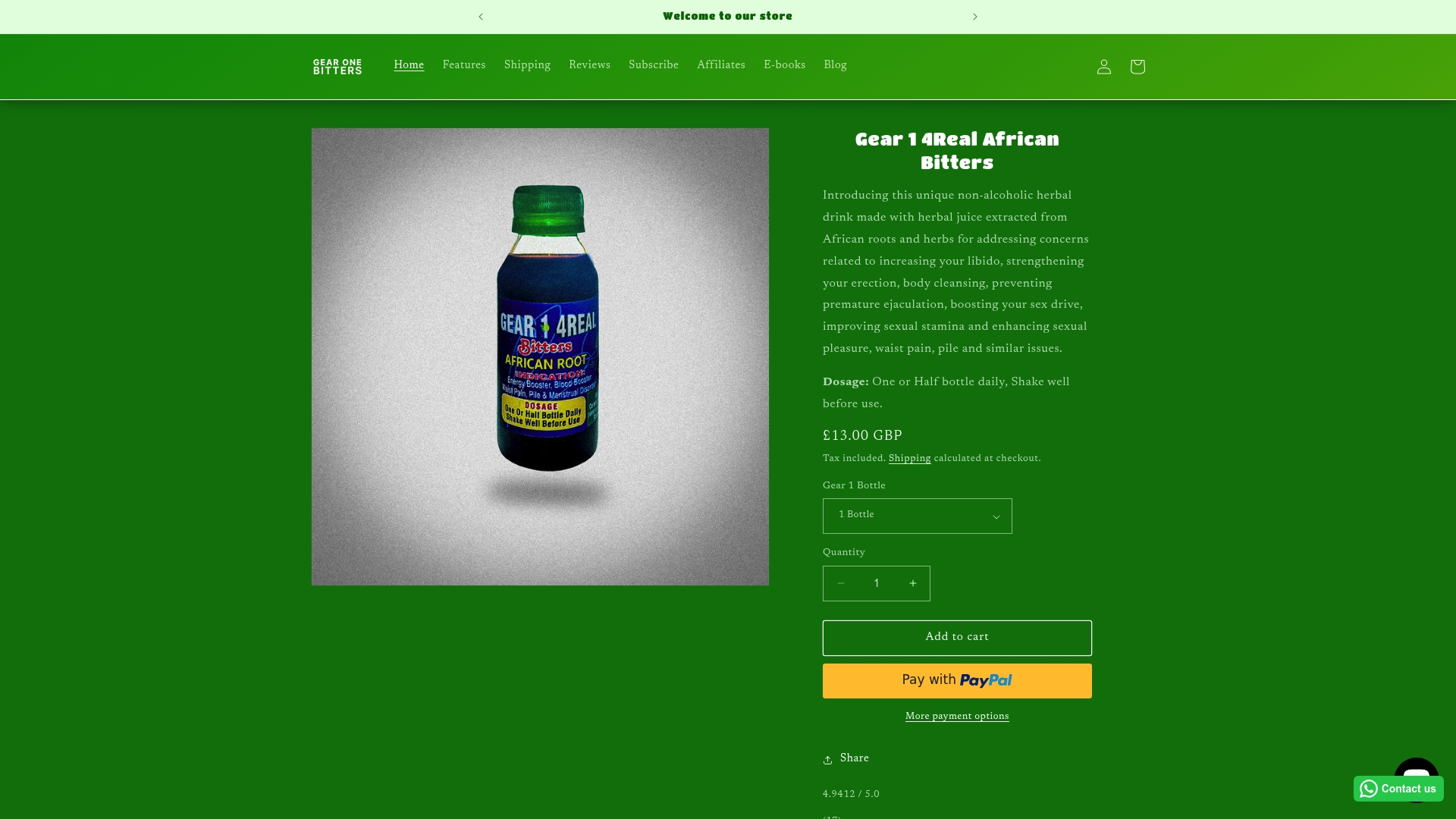
Gear1 is available in the UK. As with any botanical product, check with your GP or pharmacist before use if you take prescription medication, particularly antidepressants, blood thinners, or hormone therapies. For readers who want to understand the African herbs behind the formula, the Gear1 blog on African herbs covers the background in detail.
Ready to try it? Visit the Gear1 product page for UK availability, full ingredient information, and guidance on how to use it safely alongside the lifestyle steps in this article.
Useful sources and further reading
- NHS psychosexual therapy referral guidance — explains the GP referral pathway, what to expect from sessions, and how physical causes are excluded first.
- Mayo Clinic: low sex drive in women — diagnosis and treatment — authoritative multi-factor treatment framework; useful to share with a GP or therapist.
- Plant-based diet index and erectile dysfunction — PMC (PMCID: PMC9474604) — prospective data on healthy vs unhealthy plant-based patterns and ED risk by age group.
- Herbal sexual enhancers review — PMC (PMCID: PMC7602496) — peer-reviewed safety review covering adverse effects, lack of standardisation, and drug interactions for botanical libido products.
- Exploring scientifically proven herbal aphrodisiacs — PMC (PMCID: PMC3731873) — pharmacological review of plant-origin aphrodisiacs including ginseng, tribulus, and maca; useful for understanding mechanisms and evidence limits.
- Libido and functional foods — IntechOpen chapter — academic overview of how hormones, neurotransmitters, and psychosocial factors interact to influence desire.
- Healthline: how to increase your libido — accessible summary of communication, stress reduction, and dietary steps; good for sharing with a partner.
- Gear1 blog: natural herbs for sex drive — covers nine plant-based herbs with safety notes; useful context for readers exploring the Gear1 product range.
Recommended
- Natural herbs boosting sex drive: 9 proven options – Gear 1 4Real African Bitters
- Natural remedies for erectile dysfunction: 9 proven options – Gear 1 4Real African Bitters
- Natural ways enhancing bedroom pleasure: 10 proven tips – Gear 1 4Real African Bitters
- Natural remedies for erectile dysfunction: 8 proven options – Gear 1 4Real African Bitters
About Gear 1 4Real African Bitters — a non-alcoholic herbal bitters made from African root and herb extracts, blended to a traditional recipe rooted in generations of use. See the product and full ingredients list.
Food supplement. Not intended to diagnose, treat, cure or prevent any disease.