
African herbs boost libido by triggering biochemical pathways that improve blood flow, support hormonal balance, and protect reproductive tissue from oxidative damage. This is not folk wisdom dressed up in modern language. Recent 2026 animal studies on plants such as Uvaria chamae, Cylicodiscus gabunensis, and Pausinystalia yohimbe show effects comparable to pharmaceutical treatments for erectile dysfunction. Understanding how African herbs boost libido means understanding the science behind nitric oxide, antioxidant defence, and testosterone modulation. This guide covers the evidence, the mechanisms, the traditional context, and the safety considerations you need before adding any herbal remedy to your routine.
Which African herbs have scientific evidence supporting libido enhancement?
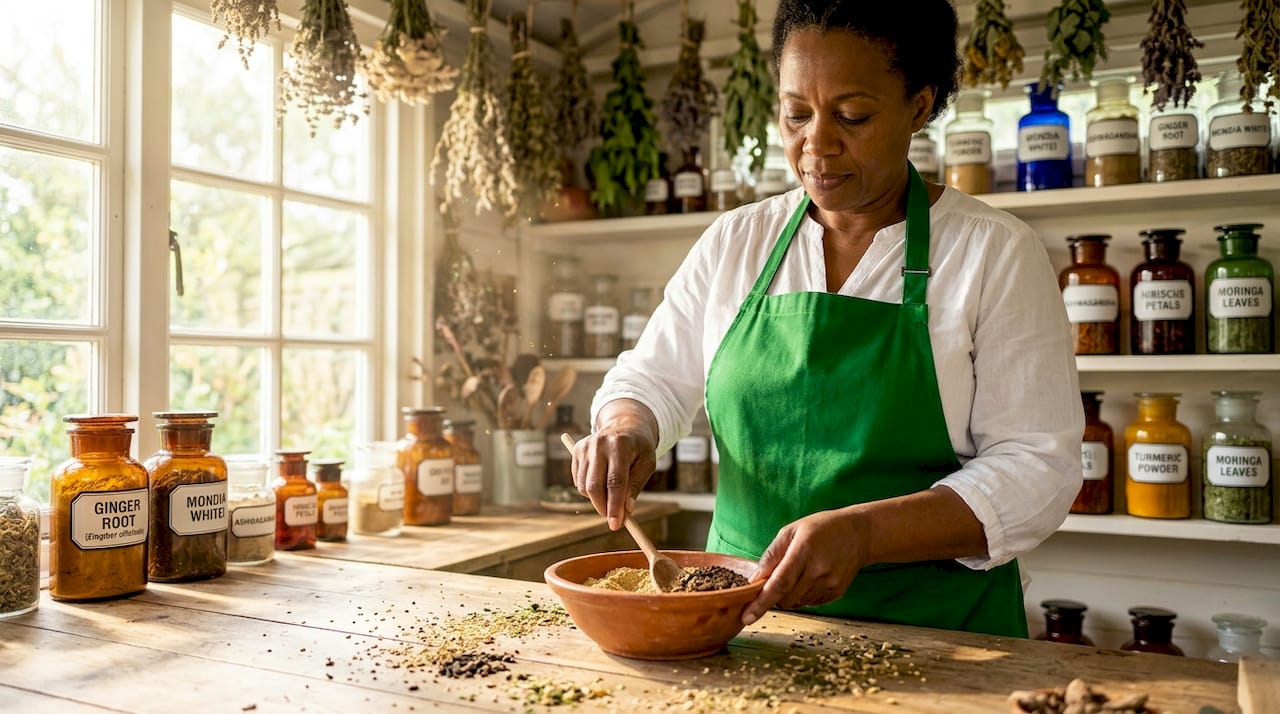
The most studied herbs in this category are Uvaria chamae, Cylicodiscus gabunensis, Pausinystalia yohimbe (known in West Africa as Burantashi), Zingiber officinale (ginger), and Mondia whitei. Each has been examined in controlled preclinical settings, and the findings are worth knowing.
A 2026 animal study found that extracts from Uvaria chamae and Cylicodiscus gabunensis produced higher mount frequency, increased intromission frequency, reduced latencies, and shorter post-ejaculatory intervals in treated rats. These are the standard behavioural proxies researchers use to measure sexual function in male rodents. The results were comparable to Sildenafil, the active compound in Viagra. That comparison matters because it places these herbs within a measurable pharmacological range, not just anecdotal territory.
Burantashi (Pausinystalia yohimbe) works through a different but related route. Research shows it increases nitric oxide synthase gene expression dose-dependently in rats, with a fold-change of 2.45 at 200 mg/kg. Sildenafil produced a fold-change of 2.10 in the same study. Nitric oxide synthase is the enzyme that produces nitric oxide, the molecule responsible for relaxing blood vessel walls and allowing increased blood flow to penile tissue. The fact that Burantashi matches or exceeds Sildenafil on this measure is significant for understanding its traditional reputation.
Zingiber officinale and Mondia whitei take a different approach. Their antioxidant properties protect sperm quality, testosterone levels, and hormonal balance in diabetic male rats. Diabetes is one of the most common underlying causes of sexual dysfunction, so herbs that address metabolic damage to reproductive tissue serve a dual purpose. This makes them particularly relevant for men whose libido issues are connected to broader health conditions.
| Herb | Active mechanism | Evidence type |
|---|---|---|
| Uvaria chamae | Improved sexual behaviour proxies | Animal study (2026) |
| Cylicodiscus gabunensis | Improved erectile behaviour, comparable to Sildenafil | Animal study (2026) |
| Pausinystalia yohimbe | Nitric oxide synthase upregulation | Animal study |
| Zingiber officinale | Antioxidant, testosterone support | Animal study (diabetic model) |
| Mondia whitei | Sperm quality and hormonal balance | Animal study (diabetic model) |
It is worth noting that animal model studies use behavioural markers such as mount frequency and latency as proxies for libido. These do not directly translate to human sexual desire or performance. They are promising indicators, not confirmed human outcomes. For a broader look at natural libido enhancement, the research base is growing but human trials remain the next necessary step.
How do African herbs biologically enhance libido and sexual function?
Three primary biological mechanisms explain how African roots improve erections and sexual drive. Each operates at a different level of physiology, and together they create a meaningful case for why these plants have been used medicinally for centuries.
Nitric oxide pathway. Nitric oxide is the molecule that signals smooth muscle in blood vessel walls to relax. When vessels in penile tissue relax, blood flow increases and erection becomes possible. Burantashi’s ability to upregulate nitric oxide synthase directly supports this mechanism. This is the same pathway that pharmaceutical erectile dysfunction drugs target, which is why the comparison to Sildenafil is scientifically meaningful rather than merely marketing language.
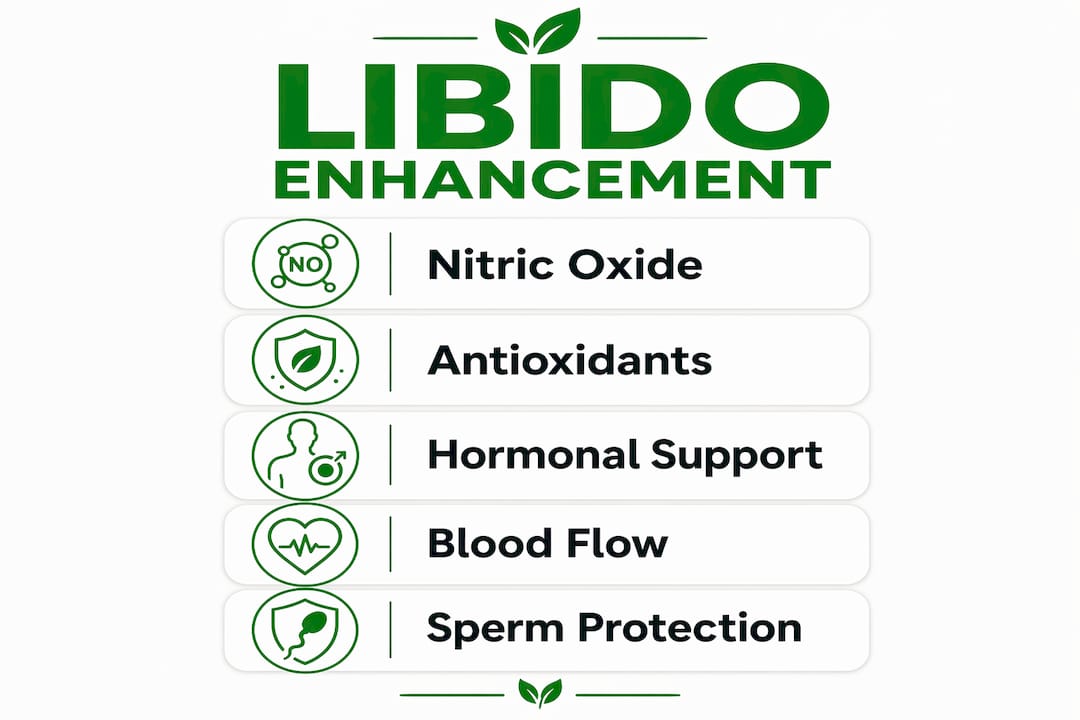
Antioxidant and anti-inflammatory protection. Oxidative stress damages sperm cells, reduces testosterone production, and impairs the blood vessels that support erection. Zingiber officinale and Mondia whitei counter this by delivering antioxidant compounds that neutralise free radicals in reproductive tissue. In diabetic rat models, this translated to measurable improvements in sperm quality and hormonal balance. For men dealing with metabolic health challenges, this mechanism is particularly relevant.
Hormonal modulation. Some African herbs appear to support testosterone production, either directly or by reducing the oxidative burden on the testes. Testosterone is the primary driver of male libido, and any herb that supports its production or reduces its degradation will have a downstream effect on sexual desire and stamina. The evidence here is still largely preclinical, but the direction is consistent across multiple studies.
Pro Tip: If you are exploring African herbs for sexual performance, look for products that specify the plant part used (root, bark, or leaf) and the extraction method. These details affect potency and safety significantly.
Sexual dysfunction has multifactorial causes, and plant-based therapies work best when underlying medical or psychological conditions are also addressed. Herbs support physiological pathways. They do not replace a diagnosis.
Traditional uses versus current scientific perspectives
African traditional medicine has used these plants for generations, often for conditions that overlap with sexual health risk factors. Understanding that context helps you interpret the science more accurately.
-
Uvaria chamae is used across West Africa, particularly in Benin, where an ethnobotanical survey found 87.1% recognition among traditional practitioners. Its primary applications include managing diabetes and infectious diseases. Since diabetes is a leading cause of erectile dysfunction, the herb’s traditional role in metabolic health directly connects to its potential sexual health benefits.
-
Pausinystalia yohimbe (Burantashi) has a well-documented history as an aphrodisiac in West and Central Africa. Its bark has been used in teas and tonics for centuries. The modern scientific finding that it upregulates nitric oxide synthase provides a plausible biological explanation for what traditional users observed empirically.
-
Mondia whitei, sometimes called “white’s ginger,” is used across East and Southern Africa as a tonic for male vitality. Traditional healers prescribe the root for low libido and general fatigue. Its antioxidant properties, now confirmed in laboratory settings, align with these traditional claims.
-
Traditional use provides ethnomedical context, but it does not substitute for clinical efficacy proof. Conservation of these plants is also an emerging concern. Overharvesting driven by commercial demand threatens wild populations of several species, including Uvaria chamae.
-
Rigorous clinical trials in human populations are still needed for all of these herbs. Preclinical evidence is a strong starting point, but effective libido enhancement from African herbs is supported primarily by preclinical data. Human dosing, safety thresholds, and interaction profiles remain areas requiring formal research.
The gap between traditional use and clinical validation is not a reason to dismiss these herbs. It is a reason to approach them with informed caution rather than uncritical enthusiasm.
What safety and dosage considerations should you know?
Natural does not mean risk-free. Several African herbs used for libido and sexual performance carry real toxicological concerns, particularly at high doses or with prolonged use.
Rhoicissus tridentata, a herb used in traditional prostate and sexual health management, illustrates this clearly. Studies show it produces dose-dependent toxicity in rats, with clinical signs including lethargy, gastrointestinal disturbances, and respiratory changes. The maximum tolerated dose was approximately 1,500 mg/kg, and potential hepatotoxicity and nephrotoxicity were observed at higher doses. No mortality occurred in the study, but the organ-level effects are a clear signal that dosage matters.
Key safety considerations to keep in mind:
- Standardisation matters. High variability in extraction methods and dosage forms affects both efficacy and safety. A product that specifies its extraction method and plant part is more reliable than one that simply lists an herb by name.
- Form affects potency. Raw plant material, dried powder, ethanolic extract, and aqueous extract all deliver different concentrations of active compounds. What is safe in one form may be problematic in another.
- Organ-specific risks exist. Some herbs carry hepatotoxic or nephrotoxic potential at high or prolonged doses. If you have existing liver or kidney conditions, consult a healthcare practitioner before use.
- Interactions with medications. Herbs that affect nitric oxide pathways, such as Burantashi, may interact with blood pressure medications or phosphodiesterase inhibitors. This is not a theoretical concern. It is a pharmacological reality.
| Herb | Reported toxicity concern | Recommended action |
|---|---|---|
| Rhoicissus tridentata | Hepatotoxicity, nephrotoxicity at high doses | Use only at studied, low doses under supervision |
| Pausinystalia yohimbe | Cardiovascular effects at high doses | Avoid combining with blood pressure medication |
| Uvaria chamae | Limited human toxicity data | Start at low doses; monitor response |
Pro Tip: Always start with the lowest available dose of any new herbal supplement and observe your body’s response over two to four weeks before increasing. This applies even to well-studied herbs.
How can you safely incorporate African herbs into your sexual wellness routine?
Incorporating African herbs for sexual performance works best as part of a considered approach rather than a quick fix. The following steps reflect both the science and practical common sense.
Consult a healthcare practitioner first, particularly if you have cardiovascular disease, diabetes, liver conditions, or are taking prescription medication. This is not optional caution. It is the responsible starting point for anyone serious about their health.
Start with formulated products rather than raw plant material. Formulated herbal bitters and extracts, such as those reviewed on sexual performance enhancer guides, offer more consistent dosing than home-prepared teas or powders. Consistency in dosage is directly linked to both efficacy and safety.
Combine herbal use with lifestyle factors that independently support sexual health. Regular physical activity improves circulation and testosterone levels. Adequate sleep supports hormonal balance. Reducing alcohol intake protects liver function, which is relevant given the hepatotoxic potential of some herbs at high doses.
Look for products with ingredient transparency. A quality herbal product will list the specific plant species, the plant part used, and the extraction method. Vague labelling is a red flag. Reviewing the ingredient list of any product before purchase gives you the information you need to make an informed decision.
Finally, treat herbal supplementation as a complement to medical care, not a replacement. African herbs enhancing sensual experience and supporting erection health are real possibilities grounded in emerging science. But they work best alongside, not instead of, professional health guidance.
Key takeaways
African herbs boost libido primarily through nitric oxide-mediated vasodilation, antioxidant protection of reproductive tissue, and hormonal support, with the strongest preclinical evidence coming from Uvaria chamae, Pausinystalia yohimbe, and Zingiber officinale.
| Point | Details |
|---|---|
| Nitric oxide is the key mechanism | Burantashi upregulates nitric oxide synthase at levels comparable to Sildenafil in animal studies. |
| Preclinical evidence is promising | Uvaria chamae and Cylicodiscus gabunensis show Sildenafil-comparable effects in 2026 animal research. |
| Traditional use has limits | 87.1% practitioner recognition of Uvaria chamae does not confirm clinical efficacy or safe human dosing. |
| Toxicity is a real concern | Rhoicissus tridentata shows dose-dependent organ toxicity; standardised dosing and medical oversight are necessary. |
| Formulation quality determines safety | Extraction method, plant part, and dosage form all affect how safe and effective a herbal product will be. |
Why I think the conversation around African herbs needs more honesty
By Ayomide
The excitement around African herbs for libido is understandable, and much of it is warranted. The 2026 findings on Uvaria chamae and Cylicodiscus gabunensis are genuinely impressive. Matching Sildenafil’s effect profile in an animal study is not a small result. But I have noticed a pattern in how these findings get communicated, and it concerns me.
Too many people read “comparable to Sildenafil in rats” and hear “works like Viagra for men.” That leap skips over the entire gap between animal models and human clinical trials. Mount frequency in a rat is not the same as desire in a man. The biology overlaps, but the translation is not automatic.
What I find more useful is framing these herbs as candidates with strong biological plausibility. The nitric oxide pathway evidence for Burantashi is particularly compelling because it connects traditional use to a mechanism we understand well. That is a meaningful signal. It tells us where to look and what to study next.
The safety side is where I think most people are underprepared. Herbs like Rhoicissus tridentata carry real organ-level risks at high doses. The assumption that “it’s natural, so it’s safe” is one of the most persistent and dangerous misconceptions in herbal medicine. Dosage, form, and individual health status all determine whether an herb helps or harms.
My honest position is this: African herbs for sexual health deserve serious scientific attention, and some of them will likely prove genuinely effective in human trials. Until those trials exist, use them thoughtfully, with good products, at sensible doses, and with a practitioner who knows your health history.
— Ayomide
Explore Gear1’s African herbal bitters for sexual wellness
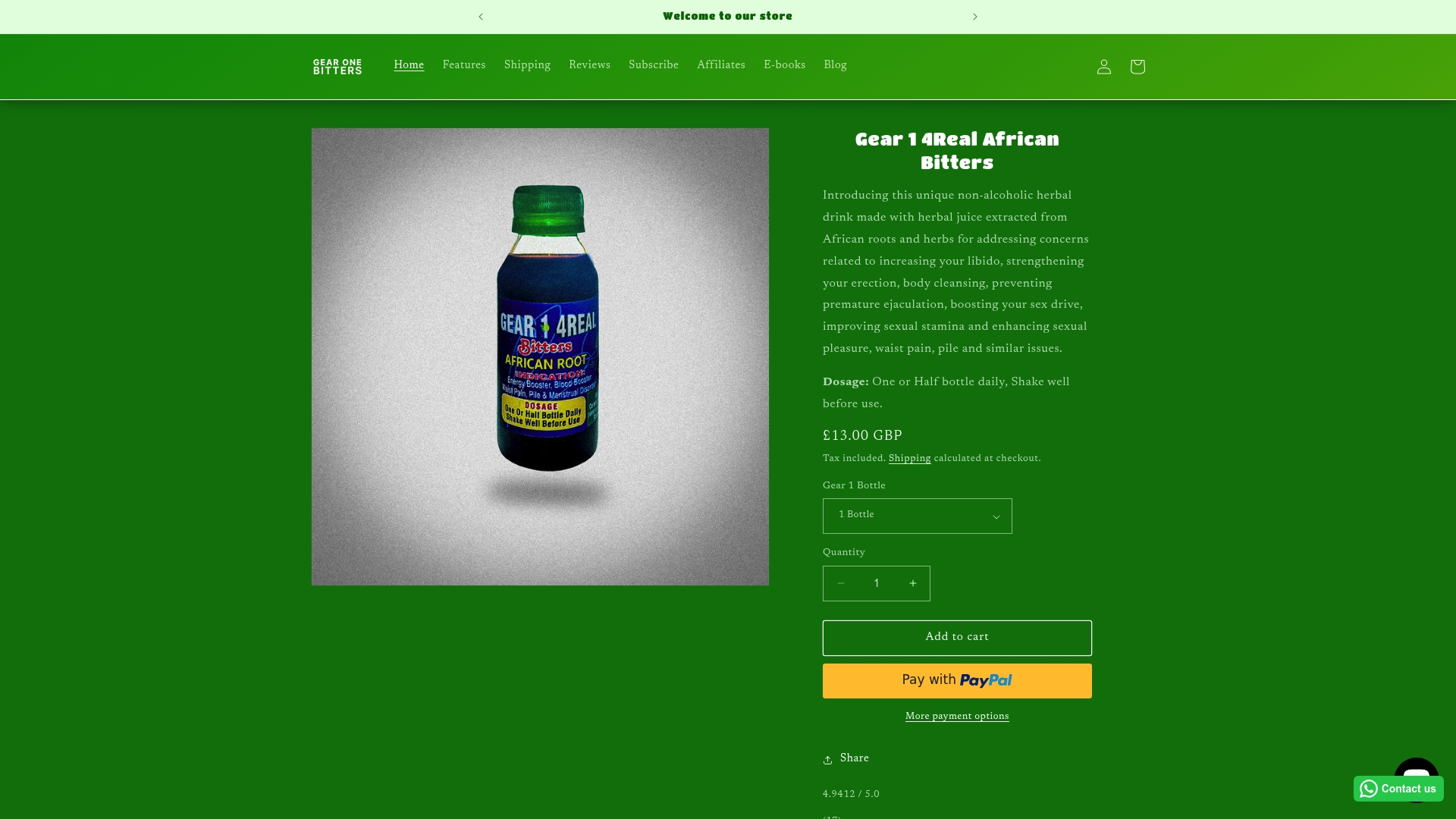
Gear1 is a non-alcoholic herbal drink made from African roots and herbs, formulated specifically to address libido, erection strength, sexual stamina, and premature ejaculation. Unlike raw plant preparations, Gear1 uses extracted herbal juice in a controlled formulation, which means you get consistent dosing without the guesswork of home-prepared remedies. The herbal bitters ingredients are listed transparently so you can see exactly what you are taking and why. If you are ready to explore a formulated African herbal product grounded in the same plant families discussed in this article, Gear1 is worth your attention. You can also review the full features of Gear1 bitters to understand how each ingredient supports your sexual health goals.
FAQ
Which African herb has the strongest evidence for libido support?
Pausinystalia yohimbe (Burantashi) has the most mechanistically detailed evidence, with studies showing it upregulates nitric oxide synthase at levels matching or exceeding Sildenafil in animal models. Uvaria chamae and Cylicodiscus gabunensis also show strong preclinical results from 2026 research.
Are African herbs for erections safe to use daily?
Safety depends on the specific herb, the dose, the form, and your individual health status. Some herbs, such as Rhoicissus tridentata, show dose-dependent organ toxicity at high doses. Daily use of any herbal supplement should be guided by a healthcare practitioner.
Do African herbs work the same way as Viagra?
They target overlapping pathways, particularly nitric oxide-mediated vasodilation, but through different mechanisms. Pharmaceutical drugs inhibit specific enzymes with precise dosing. African herbs modulate broader biological systems, which means effects are less predictable without standardised formulations.
How long does it take for African herbal remedies to show results?
Preclinical studies do not provide direct timelines for human use. Generally, plant-based therapies that work through antioxidant and hormonal pathways require consistent use over several weeks before measurable changes occur. Immediate effects are more associated with nitric oxide pathway herbs like Burantashi.
Can African herbs replace medical treatment for erectile dysfunction?
No. Sexual dysfunction has multifactorial causes, and African herbs support physiological pathways without addressing underlying medical or psychological conditions. They are best used as a complement to, not a replacement for, professional medical evaluation and treatment.
Recommended
- How to increase male libido naturally: 2026 guide – Gear 1 4Real African Bitters
- Natural remedies for erectile dysfunction: 9 proven options – Gear 1 4Real African Bitters
- What causes low sex drive in men: a clear guide – Gear 1 4Real African Bitters
- Top 6 Rida Natural Product Alternatives 2026 – Gear 1 4Real African Bitters
About Gear 1 4Real African Bitters — a non-alcoholic herbal bitters made from African root and herb extracts, blended to a traditional recipe rooted in generations of use. See the product and full ingredients list.
Food supplement. Not intended to diagnose, treat, cure or prevent any disease.