
Natural supplements are defined as bioactive compounds derived from whole foods, plants, and minerals that support the body’s physiological response to exercise. The science behind why natural supplements boost workouts is now well-established. Key categories including whey protein, creatine, beta-alanine, citrulline malate, and plant-derived antioxidants each target distinct biochemical pathways to improve energy output, reduce muscle damage, and accelerate recovery. Understanding how these compounds work gives you a real advantage, whether you train for strength, endurance, or general fitness.
Why natural supplements boost workouts: the science behind it
Natural supplements do not simply hand your muscles extra fuel. They modulate biochemical pathways that support the body’s adaptation to exercise stress. That distinction matters because it explains why some supplements take weeks to show results while others act within the hour.
Two pathways are particularly relevant for athletes. The Nrf2–Keap1–ARE pathway governs the body’s antioxidant defence system. Plant extracts rich in polyphenols, such as anthocyanins found in tart cherry and blackcurrant, activate this pathway to reduce oxidative damage caused by intense training. The AMPK pathway regulates cellular energy metabolism. Compounds like berberine and certain adaptogenic herbs stimulate AMPK, improving how efficiently your cells produce and use ATP during prolonged exercise.

The distinction between stimulant and non-stimulant supplements is also worth understanding. Caffeine is a stimulant. It acts on adenosine receptors within 30–60 minutes and raises alertness and pain tolerance during effort. Citrulline malate is a non-stimulant. It works by increasing nitric oxide production, which widens blood vessels and improves oxygen delivery to working muscles. Citrulline malate reduces soreness by up to 41.8% in the 24–48 hour post-workout window. That level of recovery support translates directly into your ability to train hard again sooner.
Pro Tip: Time your stimulant supplements, such as caffeine, 30–45 minutes before training. Time your recovery supplements, such as whey protein, within 60 minutes after. Mixing up the timing is one of the most common reasons athletes feel underwhelmed by their results.
How adaptogenic herbs support training
Adaptogenic herbs including ashwagandha and rhodiola rosea work differently from direct performance compounds. They reduce cortisol, the stress hormone that rises sharply after intense training and suppresses testosterone production. Lower cortisol means faster recovery and better hormonal balance over time. If you want to understand how natural testosterone support connects to workout performance, the hormonal angle is a good place to start.
Which supplements work best for strength, endurance, and recovery?
Choosing the right supplement depends on your training goal. The table below compares the most evidence-backed natural workout boosters by primary benefit, recommended dosage, and optimal timing.
| Supplement | Primary Benefit | Recommended Dose | Best Timing |
|---|---|---|---|
| Whey Protein | Muscle protein synthesis | 20–30g | Within 60 mins post-workout |
| Creatine Monohydrate | Strength and power output | 3–5g daily | Any time, consistently |
| Beta-Alanine | Muscular endurance | 3.2–6.4g daily | Pre-workout |
| Citrulline Malate | Blood flow and recovery | 6–8g | 30–60 mins pre-workout |
| Anthocyanins | Endurance and oxidative defence | 300–600mg | Daily, consistent use |
| Caffeine | Alertness and pain tolerance | 3–6mg per kg bodyweight | 30–45 mins pre-workout |
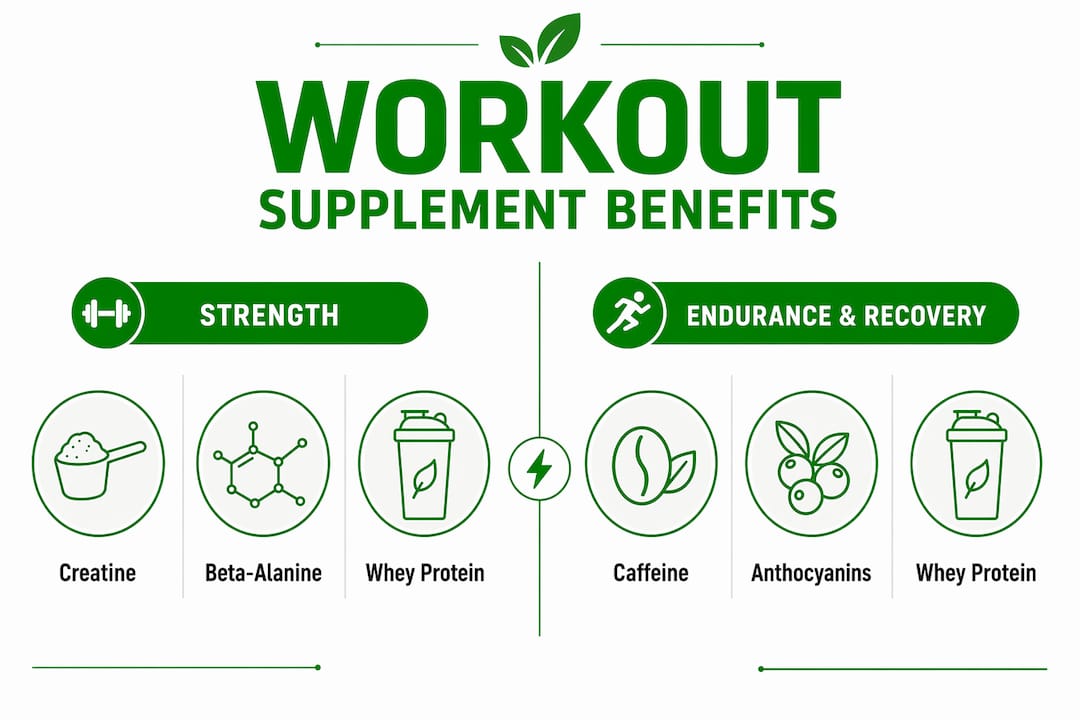
Strength training benefits most from creatine and beta-alanine. Creatine enhances energy reserves via the phosphocreatine system, replenishing ATP faster during high-intensity lifts. Beta-alanine buffers lactic acid in muscle tissue, delaying the burning sensation that forces you to stop a set early.
Endurance athletes get the most from caffeine and anthocyanins. Seven days of anthocyanin supplementation reduced competition completion time by 0.82% in reviewed trials. That figure sounds modest, but at competitive level it is the difference between a podium finish and missing the cut.
Recovery is where whey protein stands out. Consuming 20–30g of whey protein within 30–60 minutes post-workout increases muscle protein synthesis by up to 50%. Omega-3 fatty acids from fish oil also reduce exercise-induced inflammation, supporting joint health and reducing delayed onset muscle soreness over time.
Natural supplements vs. whole foods: which wins for fitness?
Whole foods are not simply vehicles for nutrients. They contain hundreds of compounds that interact with each other to improve absorption and biological effect. Nutrient synergy in whole foods enhances the bioavailability of vitamins and antioxidants compared to isolated supplements. A handful of blueberries delivers anthocyanins alongside fibre, vitamin C, and flavonoids that work together in ways a capsule cannot replicate.
That said, supplements offer two things whole foods cannot always provide: precision and convenience. When you need exactly 5g of creatine or 6g of citrulline malate before a session, measuring it from food sources is impractical. Supplements also fill genuine nutritional gaps. Athletes training twice daily often cannot consume enough protein through meals alone to meet their synthesis demands.
The practical answer is that supplements work best as a targeted addition to a solid diet, not a shortcut around one. Supplements should complement a balanced diet and consistent training. The athletes who see the best results are those who treat supplementation as the final 10% of their nutrition strategy, not the foundation.
Here is where supplements clearly earn their place:
- When caloric restriction limits food volume and micronutrient intake drops
- When training volume is high enough that whole-food protein sources cannot meet daily targets
- When specific compounds like creatine or beta-alanine are not meaningfully present in food at effective doses
- When travel or schedule disrupts regular meal preparation
How to use natural supplements effectively in your routine
Getting the effects of natural supplements on exercise right comes down to four practical principles. Follow these and you will avoid the most common mistakes that leave athletes frustrated with their results.
-
Start with your goal. Identify whether you need more strength, better endurance, faster recovery, or improved energy. Each goal maps to a different supplement category. Buying everything at once wastes money and makes it impossible to know what is actually working.
-
Respect the build-up period. Creatine and beta-alanine require weeks of consistent use to saturate muscle stores before you feel measurable benefits. Stopping after two weeks because you do not notice a difference is the single most common mistake. Caffeine works immediately. Creatine does not. Treat them accordingly.
-
Prioritise third-party tested products. NSF Certified for Sport and Informed Sport are the two most recognised certification programmes. They verify that what is on the label is actually in the product, and that no banned substances are present. This matters for competitive athletes and for anyone who wants to know they are not consuming contaminants.
-
Track your response. Keep a simple training log that notes your supplement timing, dosage, and performance metrics. After four weeks, review it. Objective data tells you far more than how you feel on any given day.
Pro Tip: If you experience tingling from beta-alanine, known as paraesthesia, split your daily dose into two smaller servings taken morning and evening. The effect is harmless but distracting during training.
Understanding washout periods
Every supplement has a washout period, the time it takes for its effects to leave your system. Caffeine has a half-life of roughly five hours. Creatine takes several weeks to deplete after you stop supplementing. Understanding this prevents you from misattributing a performance dip to training when it is actually a supplement gap. Many athletes who use herbal energy support alongside training report that consistency of use matters more than any single dose.
Key takeaways
Natural supplements boost workouts by targeting specific biochemical pathways, and their effectiveness depends entirely on choosing the right compound, dosing correctly, and using them consistently over time.
| Point | Details |
|---|---|
| Mechanism matters | Supplements work via pathways like AMPK and Nrf2, not by directly supplying energy. |
| Match supplement to goal | Creatine suits strength, anthocyanins suit endurance, whey protein suits recovery. |
| Timing is critical | Post-workout protein within 60 minutes and pre-workout stimulants 30–45 minutes before training maximise results. |
| Consistency over speed | Creatine and beta-alanine require weeks of daily use before measurable benefits appear. |
| Quality verification | Choose NSF Certified for Sport or Informed Sport products to confirm purity and label accuracy. |
What i have learned after years of watching athletes supplement badly
by Ayomide
The most persistent myth I encounter is that more supplements equal better results. Athletes stack five or six products simultaneously, then cannot identify what is helping or causing side effects. The supplement industry profits from complexity. Your performance does not.
What actually works is boring by comparison. Creatine, whey protein, and caffeine have decades of consistent evidence behind them. Most athletes would see better results from mastering those three than from chasing the latest plant extract with one small trial behind it. Over 90% of regular multivitamin users report energy and alertness benefits, yet clinical evidence for broad supplementation remains far weaker than for targeted compounds. That gap between perception and evidence is worth taking seriously.
My honest observation is that the athletes who improve most are those who treat supplements as a support structure, not a solution. They train hard, eat well, sleep enough, and then add supplements to fill specific gaps. The supplements do not carry the programme. The programme carries the supplements.
If you are just starting out, pick one supplement, use it correctly for six weeks, and measure the result. That single disciplined experiment will teach you more about your body than any supplement catalogue ever will.
— Ayomide
Discover the natural edge with Gear1
If you are serious about supporting your training with natural compounds, the quality of what you put into your body matters as much as the training itself. Gear1 4Real Herbal Bitters is a non-alcoholic herbal drink made from African roots and herbs, crafted to support vitality, energy, and overall physical wellness from the inside out.
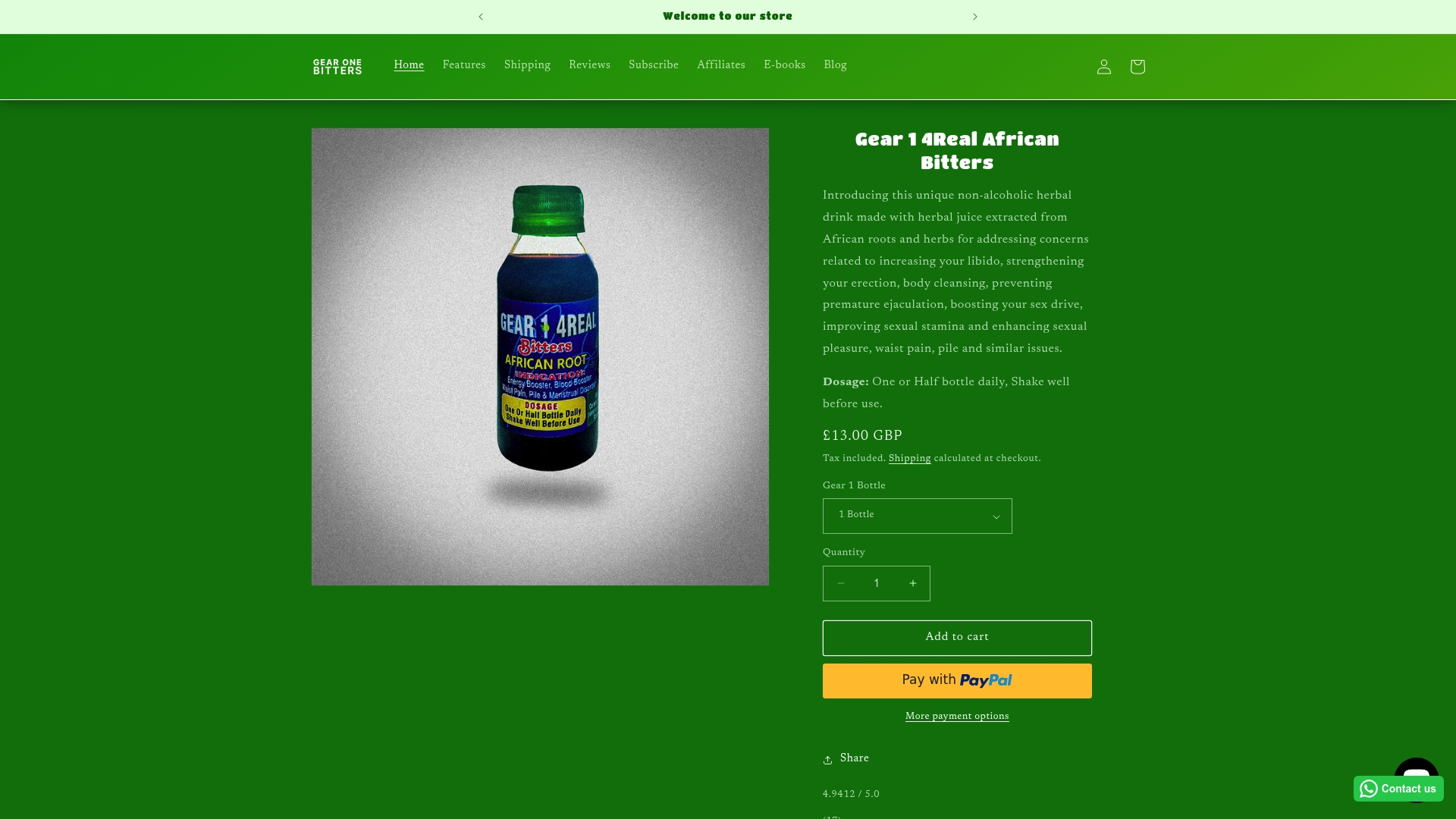
The herbal ingredients in Gear1 are drawn from a tradition of African botanical knowledge, selected for their systemic health benefits. Whether you are looking to support your energy levels, improve your physical stamina, or simply add a natural, well-sourced herbal supplement to your daily routine, Gear1 4Real Herbal Bitters is worth exploring. Go ahead and discover what a quality herbal supplement can do for your performance and recovery.
FAQ
What makes natural supplements effective for workouts?
Natural supplements work by activating biochemical pathways such as AMPK for energy metabolism and Nrf2 for antioxidant defence, supporting the body’s adaptation to exercise stress rather than simply adding calories or stimulants.
How long before natural supplements improve performance?
It depends on the compound. Caffeine acts within 30–60 minutes, while creatine and beta-alanine require several weeks of consistent daily use to saturate muscle stores and deliver measurable strength or endurance gains.
Are natural supplements better than whole foods for fitness?
Whole foods offer superior nutrient synergy and bioavailability, but supplements provide precision dosing for compounds like creatine and citrulline malate that are not present in food at effective concentrations.
Which natural supplement is best for muscle recovery?
Whey protein is the most evidence-backed option for muscle recovery. Consuming 20–30g within 60 minutes post-workout increases protein synthesis by up to 50%, making it the most direct tool for repair after training.
How do i know if a natural supplement is safe and genuine?
Look for third-party certification from programmes such as NSF Certified for Sport or Informed Sport. These verify that the product contains what the label claims and is free from banned or harmful substances.
Recommended
- How to increase male libido naturally: 2026 guide – Gear 1 4Real African Bitters
- How herbal libido boosters work: a 2026 guide – Gear 1 4Real African Bitters
- Herbal boost for bedroom passion: a complete guide – Gear 1 4Real African Bitters
- Natural remedies for erectile dysfunction: 9 proven options – Gear 1 4Real African Bitters
About Gear 1 4Real African Bitters — a non-alcoholic herbal bitters made from African root and herb extracts, blended to a traditional recipe rooted in generations of use. See the product and full ingredients list.
Food supplement. Not intended to diagnose, treat, cure or prevent any disease.