
A romantic environment improves sex by creating the emotional safety, physical comfort, and neurochemical conditions that allow desire to emerge and deepen. Most people treat ambience as decoration. Science classifies it as nervous system state management, and the distinction matters enormously for your sex life. When your surroundings signal safety, your brain releases oxytocin and dopamine, your body relaxes, and genuine arousal becomes far more accessible. This article explains the biological and psychological mechanisms at work, explores how novelty sustains long-term desire, and gives you practical steps to design a setting that consistently enhances intimacy.
Why romantic environment improves sex: the emotional and physiological case
The core reason a romantic setting enhances sex is not aesthetic. It is physiological. When your nervous system detects safety, low threat, and comfort, it shifts out of the stress response and into a state where arousal, vulnerability, and connection are possible. That shift does not happen automatically in a cluttered, brightly lit, notification-filled room.
Gottman Institute research identifies removing distractions, such as phones off and children settled, as a direct enabler of pleasurable intimacy. The finding is specific: partners who are emotionally present during sex report significantly higher satisfaction than those who are physically present but mentally elsewhere. Presence is the product of environment, not willpower.
Physical comfort plays an equally direct role. A space that is warm, private, and free of clutter reduces the low-level cognitive load that competes with arousal. Reduced performance pressure supports deeper connection and oxytocin release, which means the practical act of tidying a room or dimming the lights is not trivial. It is preparation for a biological state.

The concept of responsive desire is worth understanding here. Unlike spontaneous desire, which arises without context, responsive desire follows the right conditions. Many people, particularly those in long-term relationships, experience desire this way. Responsive desire means that sexual wanting often follows context rather than preceding it, so setting the scene is not foreplay. It is the trigger for desire itself.
Pro Tip: Before intimacy, spend five minutes adjusting your environment: lower the lights, silence your phone, and remove any visual clutter. These small changes signal safety to your nervous system and make desire far more accessible.
The practical implication is clear. Investing in your environment is not indulgent. It is one of the most direct routes to better sex available to you.
How does ambiance affect desire and bonding in the brain?
The neuroscience behind romantic settings centres on three chemicals: oxytocin, dopamine, and the anticipation response that precedes both. Understanding how they interact explains why a well-crafted atmosphere does not just feel nicer. It produces measurably different sexual and emotional outcomes.
A 2026 study on oxytocin and dopamine found that oxytocin enhances trust and social safety learning only when dopamine signalling is intact. This is a significant finding. It means that bonding does not occur simply because you are physically close to your partner. It occurs when the context feels genuinely safe and rewarding. A romantic environment creates exactly that context, activating both systems simultaneously.
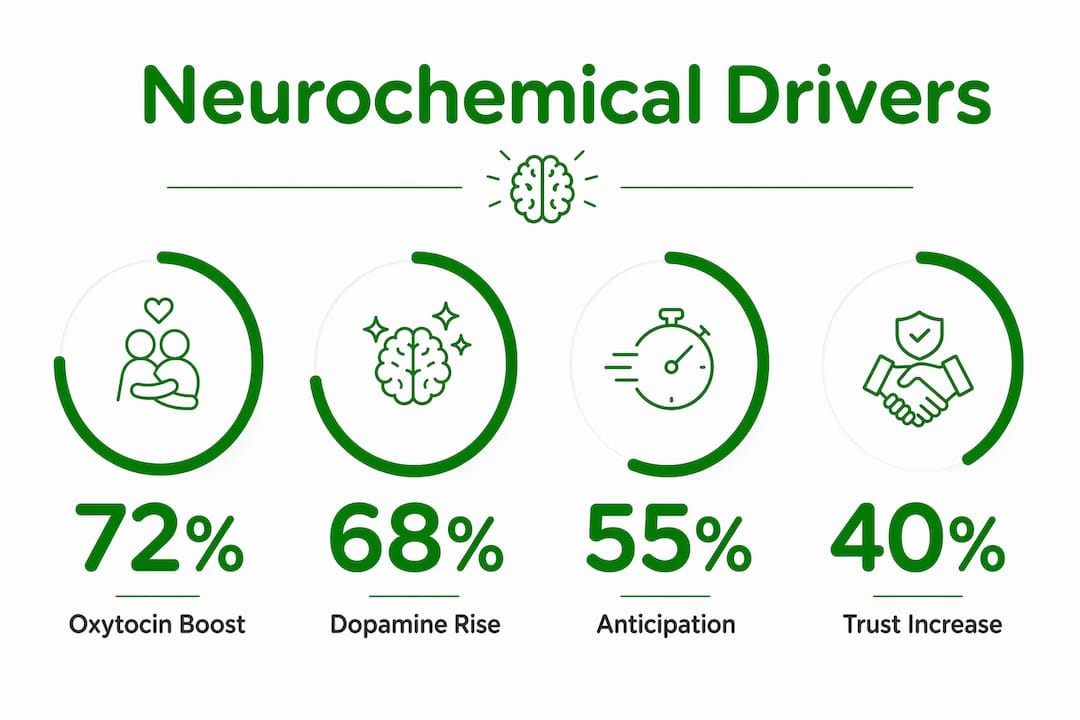
Anticipation is the third mechanism, and it is underused by most couples. Dopamine neurons fire strongest during reward prediction phases, meaning the brain’s pleasure response peaks before the reward arrives. Scheduling intimacy or creating a ritual around it generates a dopamine spike in the hours beforehand. That neurological priming makes the eventual experience more intense and more satisfying.
| Neurochemical | Triggered by | Effect on intimacy |
|---|---|---|
| Dopamine | Anticipation, novelty, reward prediction | Increases desire and motivation before and during sex |
| Oxytocin | Physical touch, emotional safety, eye contact | Deepens bonding and trust during and after intimacy |
| Cortisol (reduced) | Low-distraction, comfortable environments | Lowers performance anxiety and enables arousal |
Lighting deserves specific attention here. A 2026 scoping review on affective lighting found that specific lighting conditions increase pleasure and modestly reduce arousal-related anxiety during intimate settings. Warmer, lower-intensity light reduces cortisol and signals the brain that the environment is safe and private. This is not a minor aesthetic preference. It is a measurable physiological input.
“Sexual wanting often follows the right context rather than preceding it. Setting the scene is not preparation for desire. It is the mechanism through which desire is created.”
Scent and music operate through similar pathways. Familiar, pleasant scents activate the limbic system, which governs emotion and memory, reinforcing positive associations with your intimate space. Soft, consistent background music reduces ambient noise and further signals the brain that the environment is contained and safe. Together, these sensory inputs build a neurological case for desire before a single touch occurs.
Does novelty in your environment sustain long-term desire?
Long-term couples frequently report declining sexual frequency and satisfaction, and the standard advice is to communicate more or try harder. The more accurate answer is to change the context. Novelty reactivates dopamine circuits linked to early romantic love, which explains why new experiences with a familiar partner can feel surprisingly electric.
A 2019 study published in Archives of Sexual Behavior found that variety predicts satisfaction more strongly than frequency in long-term relationships. Couples who introduced new elements into their intimate lives reported higher satisfaction regardless of how often they had sex. This reframes the goal entirely. The question is not how often you are intimate. It is how different each experience feels.
Environmental novelty is one of the most accessible levers available. You do not need expensive holidays or elaborate planning. Small, deliberate changes produce real neurological effects. Here are four practical ways to introduce novelty through your environment:
- Change the time of day. Morning intimacy activates different hormonal profiles than evening encounters. Testosterone peaks in the morning, and the shift in routine alone creates a sense of novelty.
- Alter the lighting. Candles, fairy lights, or a simple change from overhead to bedside lamps creates a visually distinct experience that signals something different is happening.
- Move the location. Intimacy in a different room, a hotel room, or even a rearranged bedroom activates the brain’s novelty response and increases dopamine release.
- Introduce a new sensory element. A new scent, a different playlist, or a change in room temperature creates a fresh sensory context that prevents habituation.
Pro Tip: You do not need to overhaul your entire routine to introduce novelty. Changing just one environmental element, such as the lighting or the time, is enough to activate the dopamine response associated with new experiences.
The key insight is that your brain habituates to repeated contexts. The same room, the same time, the same sequence of events trains your nervous system to expect a predictable outcome, and predictability suppresses dopamine. Variety in setting is not a luxury for couples with time on their hands. It is a biological requirement for sustained desire.
Practical ways to create a romantic setting that enhances sex
Creating a setting that consistently supports intimacy requires attention to four areas: scheduling, sensory environment, privacy, and emotional connection before physical contact. Each one addresses a specific barrier to desire.
Scheduling intimacy feels counterintuitive to many couples, but the evidence is clear. Planned intimacy at least twice monthly increases sexual satisfaction by 33% compared to purely spontaneous encounters. Lower-desire partners report significantly reduced anxiety and rejection feelings when sex is planned rather than initiated without warning. Scheduling does not kill romance. It creates the anticipation that romance requires. You can find more on building this kind of connection in this guide to igniting marital intimacy.
The sensory environment covers lighting, scent, sound, and temperature. Warm, dim lighting reduces cortisol and signals privacy. A consistent, pleasant scent, whether from a candle, diffuser, or clean bedding, builds a conditioned association between that smell and intimacy over time. Soft background music at a low volume reduces intrusive ambient noise. A room temperature between 18 and 21 degrees Celsius supports physical comfort without distraction.
Privacy is non-negotiable. Intimacy thrives in protected, private spaces where partners can be vulnerable without social surveillance. This means phones on silent and out of reach, doors locked where possible, and childcare or household responsibilities addressed in advance. The psychological weight of potential interruption is enough to suppress arousal even when nothing actually interrupts.
Emotional connection before physical contact is the final and often most neglected element. Brief, non-sexual physical touch, shared laughter, or a few minutes of genuine conversation without screens activates oxytocin and builds the emotional safety that makes physical intimacy feel meaningful rather than mechanical. Explore natural methods to enhance attraction as a complement to these environmental strategies.
Key takeaways
A romantic environment improves sex because it directly activates the neurochemical systems, oxytocin, dopamine, and reduced cortisol, that make desire, bonding, and satisfaction possible.
| Point | Details |
|---|---|
| Environment triggers responsive desire | Sexual wanting follows the right context; setting the scene creates desire rather than waiting for it to appear. |
| Oxytocin needs dopamine to bond | Safe, rewarding contexts activate both chemicals together, producing genuine emotional and physical connection. |
| Anticipation amplifies pleasure | Planned intimacy generates dopamine spikes beforehand, making the experience neurologically more intense. |
| Novelty sustains long-term desire | Variety in environment predicts satisfaction more strongly than frequency in established relationships. |
| Sensory inputs are physiological tools | Lighting, scent, temperature, and privacy each reduce cortisol and signal safety to the nervous system. |
The part most couples get completely wrong about ambience
I have spoken with and read extensively about couples who invest real effort into their relationships but consistently overlook the environment as a variable. They focus on communication, frequency, and technique, and then wonder why desire still feels elusive. The honest answer is that you cannot think your way into arousal if your nervous system is in a low-level stress state.
What changed my understanding of this was recognising that ambience is not about romance in the sentimental sense. It is about nervous system regulation. A dim, quiet, private room does not feel nicer because it is prettier. It feels different because your brain reads it as safe, and safety is the prerequisite for vulnerability, and vulnerability is the prerequisite for genuine intimacy.
The other thing most people resist is scheduling. There is a persistent belief that planned sex is lesser sex, that desire should arrive spontaneously or not at all. That belief is not supported by neuroscience or by the experience of couples who have actually tried it. Scheduling conditions your brain to associate a specific context with pleasure and safety over time. The anticipation it creates is real dopamine, not a consolation prize.
My honest recommendation is to treat your intimate environment as seriously as you treat any other aspect of your relationship. Adjust the lighting. Silence the phone. Plan the time. These are not romantic gestures. They are physiological interventions, and they work.
— Ayomide
Support your intimate life with Gear1

A well-crafted romantic environment sets the stage, but your body’s physical readiness matters just as much. Gear1 is a unique non-alcoholic herbal drink made with juice extracted from African roots and herbs, formulated to support libido, strengthen erections, prevent premature ejaculation, and improve sexual stamina. When your environment signals safety and your body is primed for performance, the combination produces a noticeably different experience. Discover the natural herbal ingredients behind Gear1 and understand exactly what you are putting into your body. You can also explore the full range of herbal remedies for sex drive to find the right support for your intimate health goals.
FAQ
Does the setting really influence sexual enjoyment?
Yes. Distraction-free, comfortable environments directly increase emotional presence and sexual satisfaction, according to Gottman Institute research. The setting shapes your nervous system state, which determines how accessible arousal and connection are.
How does mood affect sexual experience?
Mood is largely a product of environment and neurochemistry. When cortisol is low and oxytocin and dopamine are active, mood supports desire and bonding. A romantic setting creates exactly those conditions by reducing stress signals and increasing sensory comfort.
Does scheduling sex reduce spontaneity?
Scheduling intimacy increases satisfaction by 33% compared to purely spontaneous encounters and reduces anxiety in lower-desire partners. The anticipation generated by planning produces genuine dopamine, making scheduled intimacy neurologically as rewarding as spontaneous sex.
What is the most effective lighting for intimacy?
Warm, low-intensity lighting is most effective. A 2026 scoping review found that specific lighting conditions increase pleasure and reduce arousal-related anxiety, with warmer tones consistently outperforming bright or cool overhead lighting.
How often should couples introduce novelty into their intimate environment?
Variety predicts satisfaction more strongly than frequency in long-term relationships, so introducing even one new environmental element per encounter, such as a different time, location, or lighting, is enough to activate the dopamine response that sustains desire.
Recommended
- Bedroom Secrets: Tips For Igniting Marital Intimacy – Gear 1 4Real African Bitters
- Herbal boost for bedroom passion: a complete guide – Gear 1 4Real African Bitters
- Natural herbs boosting sex drive: 9 proven options – Gear 1 4Real African Bitters
- What causes low sex drive in men: a clear guide – Gear 1 4Real African Bitters