
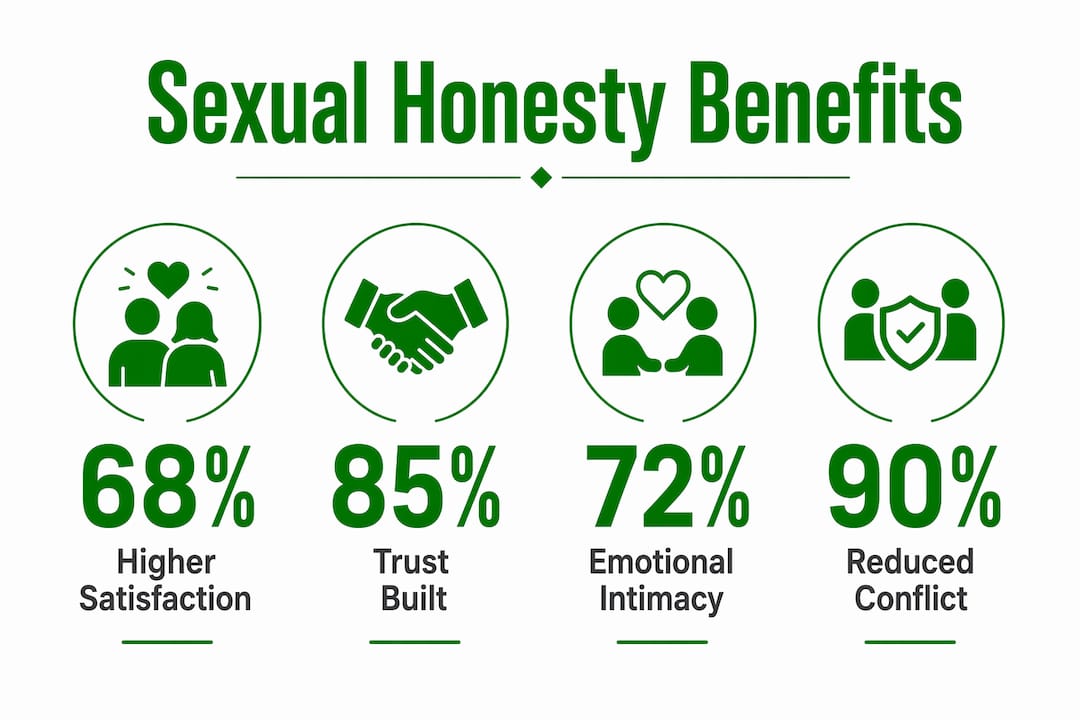
Honesty in sexual relationships is defined as the consistent, open sharing of desires, boundaries, and emotional needs between partners. Research confirms that why honesty improves sexual relationships goes far deeper than simply avoiding lies. A 2026 study of 418 individuals found that perceived honesty in a partner correlates strongly with appreciation and positive relationship outcomes. That finding matters because it shows honesty is not a soft virtue. It is a measurable driver of satisfaction. When you speak truthfully about what you want and what you feel, you give your partner the information they need to actually meet you. That is where real intimacy begins.
How does honesty build trust and emotional intimacy in sexual relationships?
Trust is not built through grand gestures. John Gottman’s research shows that trust accumulates through small, consistent acts of honest responsiveness. Each time you tell the truth and your partner receives it with care, you add to a growing sense of security between you.
Emotional intimacy works the same way. Gottman describes what he calls “sliding door” moments: brief exchanges where one partner reaches out and the other either turns towards or away. Repeated honest responsiveness in these moments builds trust and intimacy simultaneously, not one after the other. This is a critical distinction. Many couples wait until they feel safe before they open up. The research says the opposite is true. You build safety by opening up first.
This process has a direct physiological effect. When the nervous system registers emotional safety, the body relaxes into pleasure. Sexual openness follows naturally. Without that safety, the body stays guarded, and desire contracts.
- Honest disclosures met with curiosity, not defensiveness, reinforce future openness.
- Small truthful moments compound into relational security over months and years.
- Emotional safety created by honesty lowers the physiological barriers to sexual pleasure.
- Avoiding difficult truths signals to the nervous system that the relationship is not fully safe.
Pro Tip: Before a difficult conversation, name your intention out loud. Saying “I want to tell you something because I trust you” signals care and reduces the chance your partner responds with defensiveness.
Why does honest sexual communication predict satisfaction better than technique?
Sexual communication quality predicts sexual satisfaction more strongly than frequency or technique. A 2024 daily diary study of 214 couples confirmed that higher quality sexual communication produces more consistently satisfying experiences. That result challenges a common assumption: that better sex comes from learning new techniques or having sex more often.

The real mechanism is simpler. When partners speak honestly about what they want, they eliminate guesswork. Misaligned expectations are one of the most common sources of sexual frustration. Honest dialogue removes them. A partner who says “I prefer this” or “that does not feel good for me” gives their partner a clear path to genuine connection rather than repeated misfires.
A 2026 cross-cultural study across six European countries and over 7,000 respondents confirmed that open sexual communication enhances both relationship satisfaction and broader life satisfaction. The finding held across diverse couple types and cultural backgrounds. This is not a Western or culturally specific effect. It is a human one.
| What couples focus on | What actually predicts satisfaction |
|---|---|
| Frequency of sex | Quality of sexual communication |
| Learning new techniques | Honest sharing of desires and limits |
| Physical performance | Emotional safety and responsiveness |
| Avoiding difficult topics | Ongoing, caring honest dialogue |
One nuance deserves attention. Tone matters as much as content. Honest communication delivered with care and curiosity produces better outcomes than blunt declarations. The goal is clarity and vulnerability, not criticism.
What challenges do couples face in practising honesty, and how can they overcome them?
Sexual honesty is genuinely difficult. Most people carry years of conditioning that treats sexual topics as private, shameful, or risky to discuss. Performance pressure, fear of rejection, and accumulated resentment are the three most common barriers couples face.
Sexual dysfunction often stems from honesty problems rather than physiological ones. When a person pretends to be available or enthusiastic while harbouring resentment or unmet needs, the nervous system registers the conflict. Pleasure responses shut down. The body cannot fully engage when the mind is emotionally protecting itself. This is why sexual avoidance is frequently a symptom of hidden dishonesty rather than low desire.
Prosocial white lies, the kind partners tell to avoid conflict or protect feelings, often backfire. Research suggests that these small deceptions create a false equilibrium. They prevent emotional repair and block the authentic participation that genuine sexual connection requires.
Practical steps for building honest communication:
- Get honest with yourself first. Identify what you actually feel and want before attempting to share it with your partner.
- Choose the right moment. Avoid initiating sensitive conversations immediately before or after sex. A calm, neutral setting reduces defensiveness.
- Use “I” statements. “I feel disconnected when we do not talk about this” lands differently than “You never listen.”
- Receive honesty with curiosity. How a partner responds to vulnerability determines whether honest communication continues or closes down.
- Repair quickly after conflict. Rapid repair after mistakes matters more to relational security than avoiding conflict altogether.
Pro Tip: If a conversation feels too charged to have face to face, try writing a short note first. It gives both partners time to process before responding, which reduces reactive defensiveness.
How does honesty extend beyond the bedroom to improve overall satisfaction?
The benefits of honesty in relationships do not stop at the bedroom door. The 2026 cross-cultural study linking sexual communication to life satisfaction across six countries shows that the effects spill into daily emotional experience. Couples who communicate honestly about sex report higher positive affect, greater relational resilience, and stronger overall wellbeing.
This spillover effect works in both directions. Honest dialogue during everyday moments, about stress, about small frustrations, about what each person needs, builds the same emotional safety that makes sexual honesty possible. You cannot compartmentalise intimacy. The quality of your daily communication shapes the quality of your sexual connection.
Honest small moments also create the conditions for repair. Relationships face ruptures. What separates secure couples from struggling ones is not the absence of conflict but the ability to recover from it. Consistent honesty makes repair faster because both partners already trust that the other will tell them the truth.
“Open sexual communication enhances not just sexual satisfaction but overall life satisfaction. The effect holds across cultures, couple types, and relationship stages. Honesty is not a relationship luxury. It is a relational foundation.” — 2026 cross-cultural study, six European countries, 7,000+ respondents.
Prosocial truth-telling, honesty delivered with care and genuine concern for the other person, is categorically different from harmful deception or brutal criticism. The distinction matters. Couples who practise caring honesty build natural couple intimacy that sustains desire and connection across years, not just weeks.
Key takeaways
Honesty in sexual relationships builds trust, emotional safety, and satisfaction more reliably than any technique or frequency increase.
| Point | Details |
|---|---|
| Communication quality beats technique | A 2024 study of 214 couples found honest dialogue predicts satisfaction more than frequency or skill. |
| Trust builds moment to moment | Small, consistent honest exchanges accumulate into relational security over time. |
| Dishonesty shuts down pleasure | The nervous system blocks sexual response when the mind is emotionally protecting itself. |
| Honesty extends beyond sex | Open communication improves daily emotional wellbeing and overall life satisfaction across cultures. |
| Tone shapes outcomes | Honest sharing delivered with care and curiosity produces better results than blunt declarations. |
Honesty as the erotic act nobody talks about
I have spent years reading the research on sexual satisfaction, and the finding that consistently surprises people is this: the couples with the most fulfilling sex lives are not the ones who have discovered some new technique. They are the ones who have learned to tell each other the truth.
What I find most striking is how often people confuse honesty with aggression. They hold back because they fear that saying “that does not work for me” will wound their partner. In practice, the opposite is true. Withholding that information is what creates distance. Saying it clearly and kindly is what creates closeness.
Emotional safety is not a nice addition to a good sexual relationship. It is the foundation. Without it, the body stays guarded. With it, genuine desire has room to exist. I think vulnerability is one of the most underrated erotic forces in any relationship. Not because it is dramatic, but because it is real. And real is what actually connects people.
My honest observation is this: start small. One truthful moment, received well, changes the dynamic. You do not need a grand conversation. You need a consistent habit of small, caring truths. That is what builds the kind of intimacy that lasts.
— Ayomide
Gear1 and the natural side of honest connection
Creating the conditions for honest conversation sometimes means creating the right environment first. A relaxed, unhurried evening together can lower the emotional temperature enough for real dialogue to happen.
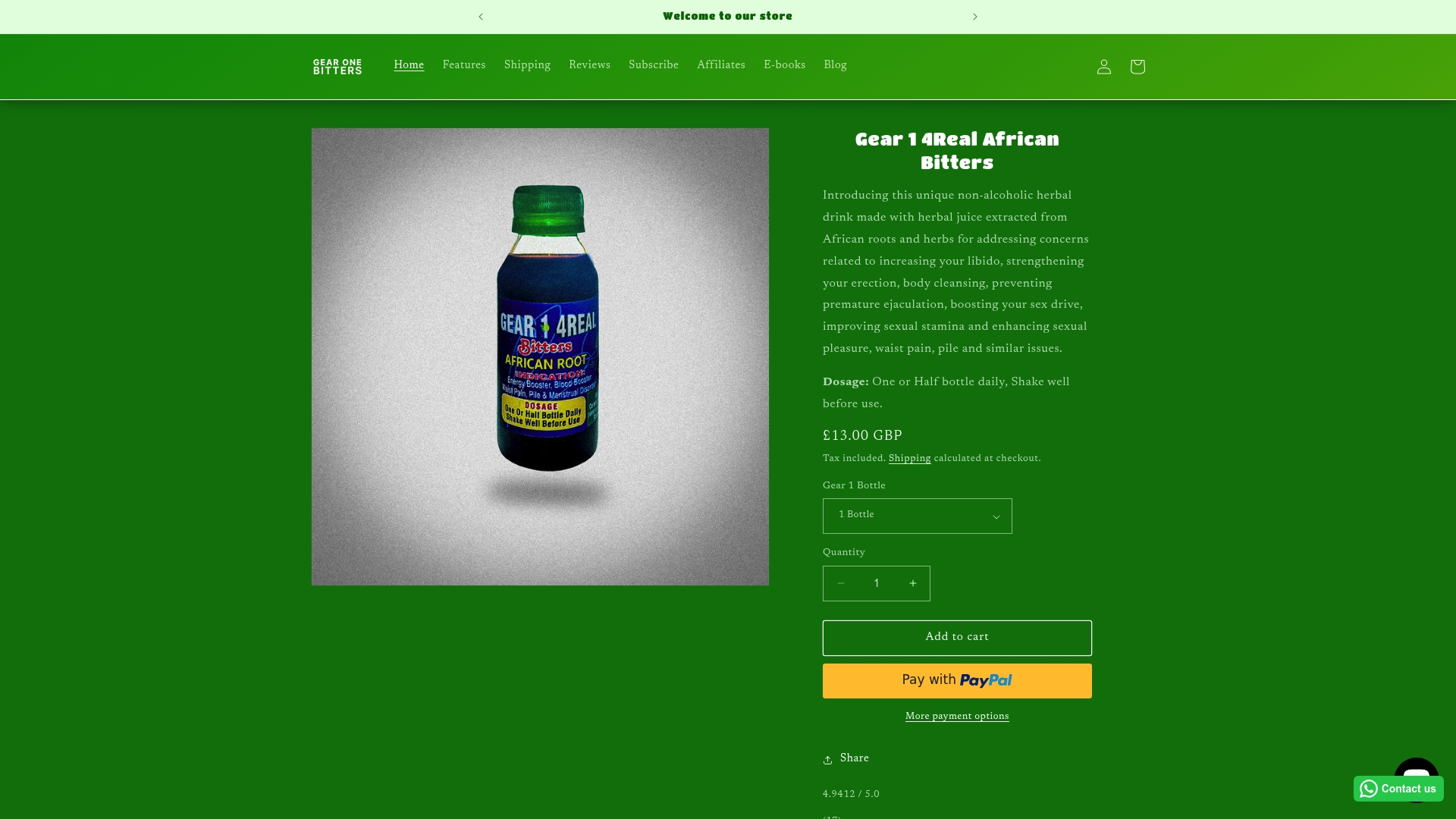
Gear1 is a non-alcoholic herbal drink made from African roots and herbs, formulated to support libido, sexual stamina, and overall vitality. Sharing a drink together before a meaningful conversation is a small ritual that signals intention and ease. Gear1 supports the physical side of intimacy, including rekindling romance and sustained desire, so that when honesty opens the door, your body is ready to walk through it. You can find Gear1 and learn more at gear1.shop.
FAQ
Does honesty really improve sexual satisfaction?
Yes. A 2024 daily diary study of 214 couples found that sexual communication quality predicts satisfaction more strongly than frequency or technique.
Why does dishonesty reduce sexual desire?
Pretending availability or enthusiasm while harbouring resentment triggers a nervous system response that blocks pleasure. The body cannot relax into desire when the mind is emotionally protecting itself.
How do you start being more honest with a partner about sex?
Get clear on what you feel before speaking. Use “I” statements, choose a calm moment outside the bedroom, and receive your partner’s honesty with curiosity rather than defensiveness.
Does sexual honesty benefit relationships outside the bedroom?
Yes. A 2026 study across six countries and over 7,000 respondents found that open sexual communication improves overall life satisfaction, not just sexual satisfaction.
Is radical honesty the same as being blunt or hurtful?
No. Radical honesty means clear, caring communication. Experts recommend getting honest with yourself first, then sharing with vulnerability and genuine concern for your partner.
Recommended
- Natural ways improving couple intimacy: 2026 guide – Gear 1 4Real African Bitters
- Build sexual confidence naturally: a practical guide – Gear 1 4Real African Bitters
- Why male sexual health impacts partners: what you need to know – Gear 1 4Real African Bitters
- What is male sexual health: a complete 2026 guide – Gear 1 4Real African Bitters
About Gear 1 4Real African Bitters — a non-alcoholic herbal bitters made from African root and herb extracts, blended to a traditional recipe rooted in generations of use. See the product and full ingredients list.
Food supplement. Not intended to diagnose, treat, cure or prevent any disease.