
Relaxation is defined as the physiological shift from the sympathetic “fight-or-flight” state to the parasympathetic “rest-and-digest” state, and this shift is the single most important precondition for satisfying sex. Without it, arousal stalls, desire fades, and connection feels out of reach. The role of relaxation in better sex is not a soft lifestyle suggestion. It is grounded in neuroscience, endocrinology, and clinical psychology. This guide explains exactly how relaxation works in the body, which techniques produce real results, and how you can build these practices into your daily life for lasting improvement in intimacy and sexual satisfaction.
How does relaxation improve sexual arousal and performance?
Parasympathetic nervous system activation promotes blood flow and sensitivity, both of which are essential for arousal. When the body is calm, blood vessels dilate, genital tissue engorges, and nerve endings become more responsive. None of this happens efficiently when the body is in a stress state.
Cortisol from chronic stress suppresses libido and disrupts sexual response cycles. Cortisol competes directly with testosterone production. When cortisol stays elevated for days or weeks, testosterone drops, and with it goes sexual desire, energy, and confidence. This is not a willpower problem. It is a hormonal one.
The neurochemical picture matters too. Dopamine drives sexual motivation and anticipation. Oxytocin deepens emotional bonding during and after intimacy. Endorphins reduce pain and increase pleasure. All three require a calm nervous system to be released effectively. Stress blocks this entire chain, which is why people under pressure often feel disconnected even when they want to be present.
Muscle tension compounds the problem in ways most people do not realise. Jaw clenching is neurophysiologically linked to pelvic floor tension, which directly affects sexual comfort and pleasure. A chronically tight pelvic floor reduces sensation and can cause discomfort during sex. Releasing tension in the jaw, shoulders, and hips creates a physical pathway for deeper pleasure.
Pro Tip: Before intimacy, spend two minutes consciously relaxing your jaw, dropping your shoulders, and breathing slowly through your nose. This simple sequence begins shifting your nervous system toward the parasympathetic state.
What stress hormones do to sexual desire
| Hormone or chemical | Effect under stress | Effect under relaxation |
|---|---|---|
| Cortisol | Suppresses testosterone and libido | Decreases, allowing desire to return |
| Dopamine | Reduced motivation and anticipation | Rises, increasing sexual interest |
| Oxytocin | Blocked by stress response | Released during calm, safe connection |
| Testosterone | Drops with prolonged cortisol elevation | Stabilises when stress is managed |
| Endorphins | Inhibited by tension and anxiety | Released freely during relaxed arousal |
What relaxation techniques actually improve intimacy?
Mindfulness meditation is the most well-researched relaxation technique for sexual wellbeing. Mindfulness-based interventions improve sexual desire by an average of 68% across a meta-analysis of 18 studies. That figure reflects a consistent pattern: when people learn to observe sensation without judgement, desire returns. The key word is “observe.” Mindfulness in the bedroom means non-judgemental awareness, not trying harder to focus. Effort is the enemy here.
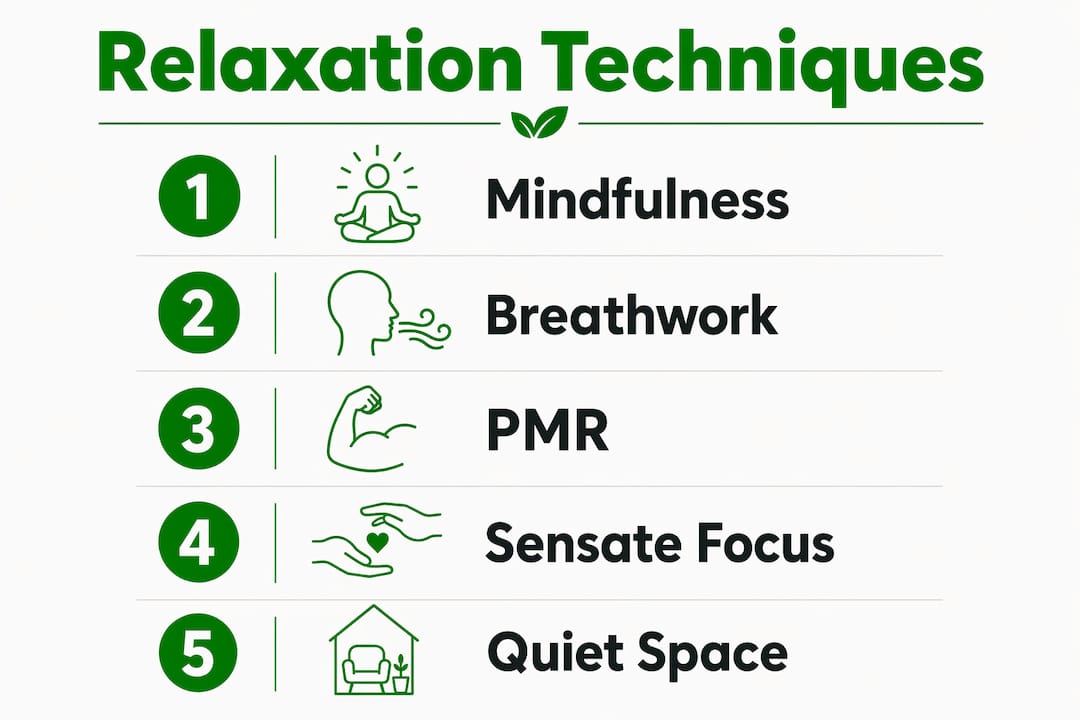
Breathwork is a direct and fast route to parasympathetic activation. Slow, diaphragmatic breathing, particularly with a longer exhale than inhale, signals safety to the nervous system within minutes. A simple pattern is four counts in, hold for four, and exhale for six. Practised for five minutes before intimacy, this technique measurably reduces heart rate and muscle tension.
Progressive muscle relaxation (PMR) works by systematically tensing and releasing muscle groups from the feet upward. The contrast between tension and release teaches the body to recognise and let go of held stress. PMR is especially useful for people who carry physical tension without noticing it, which is most people under regular work or relationship pressure.
Sensate focus is a clinical technique developed by sex therapists that removes intercourse from the session entirely. Sensate focus removes intercourse to eliminate pressure and shifts the nervous system toward present-moment awareness. Couples who practise it report 62%–74% improvement in sexual desire and satisfaction. The absence of a performance goal is precisely what makes it effective.
Creating the right environment supports all of these techniques. A quiet, interruption-free environment improves sexual arousal, particularly as people age. Dim lighting, a comfortable room temperature, and silenced devices reduce ambient stress signals that keep the nervous system on alert. You can read more about the science of romantic environment and how small changes produce measurable results.
Pro Tip: Try sensate focus with your partner once a week for a month, with no expectation of intercourse. Most couples find their desire and connection increase significantly within two to three sessions.
Key relaxation techniques for intimacy, ranked by accessibility:
- Breathwork: Requires no equipment, takes five minutes, and produces immediate physiological change.
- Mindfulness meditation: Ten minutes daily builds a baseline of calm that carries into intimate moments.
- Progressive muscle relaxation: Best practised before bed or before intimacy to release accumulated tension.
- Sensate focus: Requires a willing partner and a clear agreement to remove performance pressure from the session.
- Environmental preparation: Lighting, temperature, and device management take minutes to arrange and reduce stress signals reliably.
How does anxiety affect sex, and what can relaxation do about it?
Sexual performance anxiety affects 9%–25% of men and 6%–16% of women. Those figures mean performance anxiety is one of the most common barriers to satisfying sex, yet it is rarely discussed openly. The silence around it makes it worse, because isolation amplifies the anxiety cycle.
The mechanism is straightforward. The fight-or-flight response floods the body with adrenaline and cortisol. Blood is redirected to large muscle groups for physical action. Genital blood flow drops. Arousal becomes physiologically difficult, not because of a lack of desire, but because the body is preparing to run, not to connect. Understanding this removes a great deal of shame from the experience.
Relaxation breaks this cycle at the physiological level. The rest-and-digest state reverses the blood flow pattern, reduces adrenaline, and allows the sexual response to proceed naturally. The practical steps below address the cycle directly:
- Name the anxiety. Saying “I feel anxious about this” out loud to a partner reduces the physiological stress response. Naming an emotion activates the prefrontal cortex and dials down the amygdala, the brain’s alarm centre.
- Slow your breathing before and during intimacy. A longer exhale activates the vagus nerve, which is the primary pathway for parasympathetic activation.
- Remove the performance goal. Agree with your partner that the session has no specific outcome. This single change reduces anxiety more than any other technique.
- Practise body scanning. Spend two minutes noticing physical sensations without trying to change them. This builds the somatic awareness that makes relaxation possible during intimacy.
- Seek professional support when needed. A sex therapist or psychologist trained in somatic approaches can address performance anxiety that does not respond to self-directed techniques.
How to build relaxation into daily life for lasting sexual wellbeing
Daily habits create the physiological baseline that makes relaxation during intimacy possible. A single breathing session before sex helps, but a daily mindfulness practice changes the nervous system’s default state over weeks. Ten minutes of body-aware meditation each morning builds a cumulative effect that shows up in every area of life, including sexual connection.
Communication with a partner is itself a relaxation technique. Feeling emotionally safe with someone activates oxytocin and reduces cortisol. Expressing needs clearly, without criticism or blame, builds the kind of trust that allows both partners to be present. Couples who practise open dialogue about intimacy consistently report higher satisfaction than those who do not. You can find practical guidance on improving couple intimacy naturally to support this process.
Lifestyle factors shape the nervous system’s baseline capacity for relaxation. Sleep deprivation elevates cortisol and reduces testosterone. Regular physical exercise, particularly aerobic activity, reduces baseline cortisol and increases dopamine sensitivity. Diet plays a direct role too. Certain nutrients support hormonal balance and reduce inflammation, both of which affect sexual function. Understanding how diet affects sex drive gives you another practical lever to pull alongside relaxation practice.
Progress is not linear. The nervous system adapts gradually, and setbacks are part of the process. Forcing relaxation is counterproductive. The physiological state must be supported, not commanded, and pleasure emerges naturally when the conditions are right. Patience with yourself is not optional. It is part of the practice.
Key takeaways
Relaxation is the physiological foundation of satisfying sex, and without parasympathetic nervous system activation, arousal, desire, and connection cannot function at their best.
| Point | Details |
|---|---|
| Parasympathetic activation is essential | The rest-and-digest state drives blood flow, sensitivity, and arousal. |
| Cortisol directly suppresses desire | Chronic stress lowers testosterone and disrupts the sexual response cycle. |
| Mindfulness improves sexual desire significantly | Mindfulness-based interventions show an average 68% improvement in desire across studies. |
| Sensate focus removes performance pressure | Couples report 62%–74% improvement in desire and satisfaction using this technique. |
| Daily habits build lasting change | Sleep, exercise, diet, and communication create the baseline for relaxed intimacy. |
Why I stopped treating relaxation as optional
Ayomide here. I spent years watching people approach sexual difficulty as though it were purely a physical problem to be fixed with the right product or technique. What I have seen consistently is that the missing piece is almost always the nervous system. Performance anxiety, low desire, and disconnection from a partner rarely have a single physical cause. They are almost always rooted in a body that has not been given permission to feel safe.
The research on sensate focus changed how I think about this entirely. Removing the goal of intercourse sounds counterintuitive, even alarming to some. But the improvement figures speak clearly. When pressure disappears, the body responds. That is not a therapy trick. It is physiology.
What I find most people resist is the idea that relaxation takes time and consistency. They want a quick fix, and I understand that. But the nervous system does not respond to urgency. It responds to repetition and safety. The men and women who make the most progress are those who commit to daily practice, communicate openly with their partners, and stop measuring every intimate moment as a test. Presence, not performance, is what makes sex genuinely satisfying. That shift in perspective is available to anyone willing to practise it.
— Ayomide
Gear1 and your path to better sexual wellbeing
Natural support works best when it complements the relaxation practices you are already building. Gear1 is a non-alcoholic herbal drink made from African roots and herbs, formulated to support libido, sexual stamina, erection strength, and overall sexual vitality.
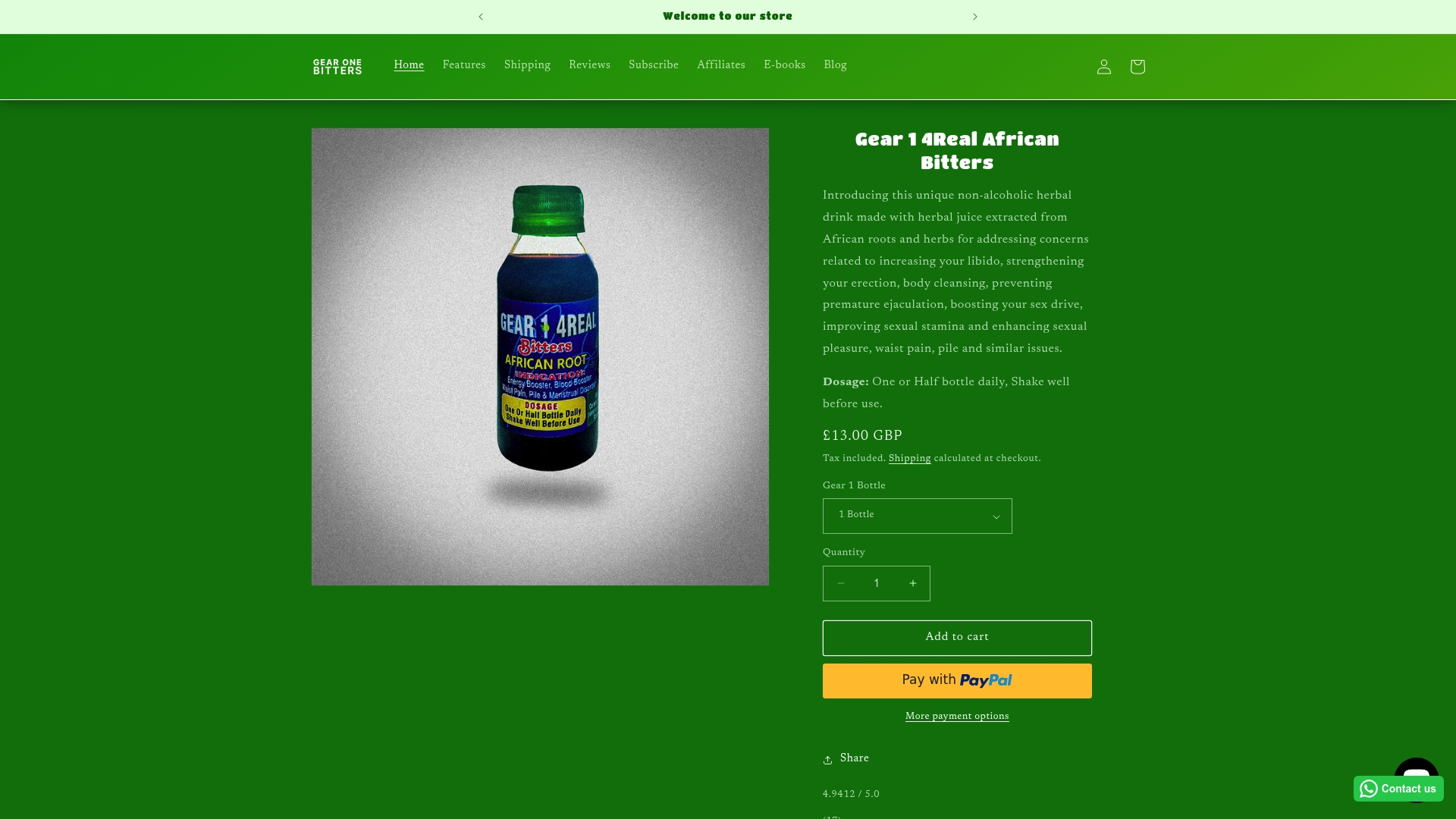
When your body is nourished with the right natural compounds, the physiological conditions for relaxation and arousal become easier to reach. Gear1 works alongside breathwork, mindfulness, and sensate focus, not as a replacement for them, but as nutritional support for the hormonal balance and energy that great intimacy requires. Explore Gear1’s herbal sexual support and see how natural plant-based nutrition fits into your wider approach to sexual wellbeing.
FAQ
What is the role of relaxation in better sex?
Relaxation activates the parasympathetic nervous system, which drives blood flow, sensitivity, and the release of dopamine and oxytocin. Without this physiological state, arousal and emotional connection are significantly impaired.
How quickly do relaxation techniques improve sexual experience?
Breathwork produces measurable physiological change within minutes. Mindfulness and sensate focus typically show meaningful improvement in desire and satisfaction within two to four weeks of consistent practice.
Does performance anxiety affect most people?
Sexual performance anxiety affects 9%–25% of men and 6%–16% of women, making it one of the most common barriers to satisfying intimacy. Relaxation techniques directly address the nervous system response that drives it.
Can relaxation help with low libido?
Chronic stress suppresses testosterone and disrupts hormonal balance, both of which reduce libido. Reducing cortisol through daily relaxation practice, combined with adequate sleep and a supportive diet, restores the hormonal conditions for healthy desire.
What is sensate focus and how does it work?
Sensate focus is a clinical technique that removes intercourse from intimate sessions to eliminate performance pressure. Couples who practise it report 62%–74% improvement in sexual desire and satisfaction, as the absence of a goal allows the nervous system to shift into a receptive, present state.
Recommended
- Why romantic environment improves sex: the science – Gear 1 4Real African Bitters
- Build sexual confidence naturally: a practical guide – Gear 1 4Real African Bitters
- Natural ways improving couple intimacy: 2026 guide – Gear 1 4Real African Bitters
- Herbal remedies for ejaculation control: proven benefits – Gear 1 4Real African Bitters
About Gear 1 4Real African Bitters — a non-alcoholic herbal bitters made from African root and herb extracts, blended to a traditional recipe rooted in generations of use. See the product and full ingredients list.
Food supplement. Not intended to diagnose, treat, cure or prevent any disease.