
Start with non-demand touch. That single step, taken today, does more to restore sexual safety than any conversation about frequency or performance. The clinical approach to rebuilding sexual connection with a partner follows a clear sequence: restore emotional safety first, reintroduce gentle physical closeness second, and allow erotic exploration to follow naturally in weeks four to six.
First-day actions you can take right now:
- Offer two moments of non-sexual affection (a 20-second hug, a hand held during a film) with no expectation attached.
- Open the conversation with one sentence: “I miss feeling close to you. Can we find small ways to reconnect?”
- Pause any pressure around sex entirely for at least seven days.
- Set a five-minute check-in tonight, just to share how each of you is feeling.
Pro Tip: Dr John Gottman’s newlywed research found that couples who turned toward each other’s bids for connection 86% of the time were still together six years later, compared with 33% for those who separated. Small moments of acknowledgement, not grand gestures, are what build lasting intimacy.
TL;DR: Week one is about safety and warmth, not sex. No pressure, no blame, no scorekeeping.
Table of Contents
- How does a six-week phased plan rebuild emotional and sexual connection?
- How do you talk about sex without blame or defensiveness?
- How does sensate focus reduce performance pressure?
- Lifestyle, medical checks and safe use of herbal supplements in the UK
- When should you seek professional help in the UK?
- Key takeaways
- Gear1’s African Bitters: natural herbal support for your reconnection plan
How does a six-week phased plan rebuild emotional and sexual connection?
Structured multi-week programmes that move from emotional reconnection through graded touch to erotic exploration produce measurable improvement in many cases of lost intimacy. Here is a week-by-week framework you can follow.
- Week 1: Rebuild emotional safety. Daily five-minute check-ins, non-demand affection, and one calm conversation about intimacy. No sexual agenda.
- Weeks 2–3: Gradual return of touch. Introduce sensate focus principles: non-sexual holding, 20-second hugs, hand-holding rituals. Touch is exploratory, not goal-oriented.
- Week 4: Low-pressure erotic activities. Use a yes/maybe/no intimacy menu to create a shared vocabulary. No intercourse required.
- Weeks 5–6: Scheduled intimate time. Set clear boundaries beforehand, reassess together at the end of each session, and establish two or three ongoing rituals of connection.
Intimacy-first steps protect emotional safety and increase the likelihood that desire will follow, rather than forcing it.
| Week | Focus | Concrete actions |
|---|---|---|
| 1 | Emotional safety | 5-min check-ins, non-demand hugs, one intimacy conversation |
| 2–3 | Non-sexual touch | Sensate focus, 20-sec hugs, hand-holding, back rubs |
| 4 | Erotic exploration | Yes/maybe/no menu, low-pressure intimacy, no intercourse goal |
| 5–6 | Scheduled intimacy | Agreed boundaries, short reassessment, ongoing rituals |
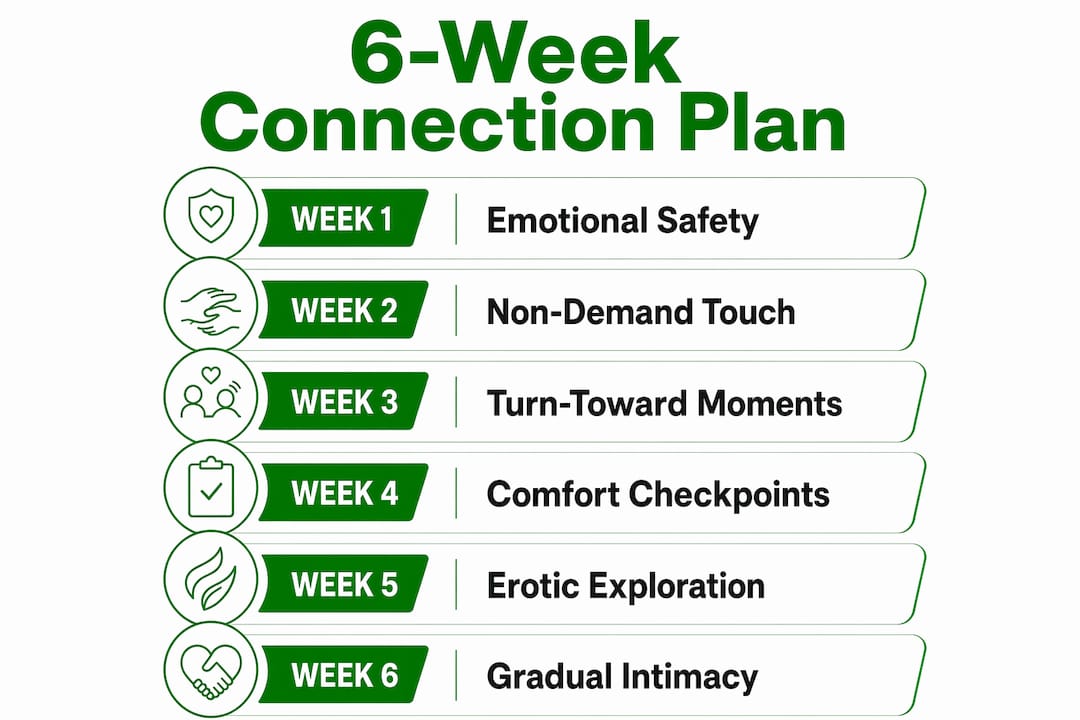
Progress checkpoints to track: comfort with non-sexual touch, frequency of turning-toward moments, feelings of safety when initiating affection, and whether appreciative statements are increasing.
How do you talk about sex without blame or defensiveness?
Use non-blaming “I” statements and frame the conversation as a shared project. Therapists caution that goal-oriented intimacy, where affection is offered purely to secure sex, creates hidden agendas and reduces receptivity. Honest, low-pressure language changes that dynamic.
Sample scripts:
- Opening: “I miss being close to you, not just physically but emotionally. I’m not putting pressure on us. Can we try a few small things together?”
- When your partner is shut down: “I can see this feels difficult. I’m not going anywhere. We can take this at whatever pace feels right for you.”
- After a misstep: “I think I pushed too hard earlier. I’m sorry. Can we reset?”
What helps vs. what escalates:
- Use “I feel…” not “You never…”
- Ask open questions; listen without arguing with their experience.
- Choose a calm moment, such as a walk or after a light meal, not after a rejection or during a disagreement.
- Avoid bringing up frequency, comparisons, or past arguments during intimacy conversations.
Timed listening exercise: Set a timer for five minutes each. One partner speaks about how they feel; the other listens and reflects back what they heard without problem-solving. Then swap. This single exercise builds attunement faster than most couples expect.
How does sensate focus reduce performance pressure?
Sensate focus, developed by Masters and Johnson, reduces performance pressure by separating touch from sexual goals entirely. You begin with non-sexual, partner-guided attention to sensation, with no expectation of arousal or intercourse.
Session template:
- Environment: Warm, private, phones off. Agree beforehand that intercourse is not the goal.
- Permission to stop: Either partner can pause at any point.
- Focus: Sensation only. Simple feedback: “more of that” or “less of that.”
| Session level | Timeframe | Boundaries |
|---|---|---|
| Beginner | — | Non-genital touch only; no arousal goal |
| Intermediate | — | Introduce gentle genital touch; no intercourse |
| Exploratory | 20–30 min | Sexual activity permitted, not required |
Responsive desire is common in long-term relationships: attraction often follows connection rather than preceding it. Sensate focus works precisely because it creates the conditions for desire rather than demanding it.
Pro Tip: Keep a private “menu” of sensations and moments that felt genuinely good, not a performance scorecard. Noticing micro-responses, a relaxed breath, a small smile, builds curiosity and keeps sessions feeling alive rather than clinical.
Lifestyle, medical checks and safe use of herbal supplements in the UK
Rule out medical causes before anything else. If low desire follows stress, medication side effects, hormonal changes, pain, or exhaustion, addressing those contributors directly is more effective than relational work alone.
Red-flag checklist and lifestyle factors:
- Pain during or after sex, or persistent pelvic discomfort.
- Recent changes to prescribed medicines, particularly SSRIs, beta-blockers, hormonal contraceptives, or antihypertensives, all of which can affect libido or arousal.
- Poor sleep, high alcohol intake, smoking, or unmanaged chronic illness.
- Sudden, significant drop in desire accompanied by fatigue, mood changes, or other physical symptoms.
- Signs of unresolved trauma or persistent resentment that make physical closeness feel unsafe.
UK-specific guidance: Speak to your NHS GP or a pharmacist before starting any herbal supplement, particularly if you take prescription medicines. Pregnant or breastfeeding women should consult a clinician before using any botanical product. Look for products with clear ingredient labelling and standardised extracts, and stop use immediately if you notice any adverse effects.
Herbal and botanical products can complement lifestyle and relational work, but they require the same caution as any supplement. Interactions with prescribed medicines are possible, and quality varies between products. Your GP or a registered pharmacist is the right first port of call.
Daily micro-actions that build closeness over time
Consistency matters far more than intensity. Two daily hugs, a warm greeting when you arrive home rather than a logistical debrief, and one sentence of genuine appreciation each evening create a steady emotional climate that supports rekindling desire over weeks.
One-day checklist:
- Morning: a 20-second hug before leaving the house.
- Midday: one text that is warm or playful, not task-related.
- Evening: a genuine “hello” greeting, then one sentence of appreciation before dinner.
- Before bed: a short check-in (“How are you feeling tonight?”) with no agenda.
“Everything positive you do in your relationship is foreplay.” — Dr John Gottman
Pro Tip: A midday check-in text builds anticipation rather than demand. Keep it light: “Thinking of you” or “Looking forward to tonight” signals warmth without creating pressure.
Novelty with emotional relevance, a new walk, cooking something together, a change of routine, also helps re-awaken attention and can support desire in long-term relationships. Small, repeated behaviours compound. One grand gesture does not.

When should you seek professional help in the UK?
Seek professional support if pain, persistent loss of desire, medication-related changes, unresolved trauma, or entrenched resentment are present. These are not signs of failure; they are signals that the situation needs more than a self-guided plan.
Red flags that warrant professional input:
- Pain during sex or persistent erectile difficulty.
- Desire that has been absent for six months or more, especially with other physical symptoms.
- Conversations about intimacy that consistently end in conflict or shutdown.
- A history of sexual trauma that makes physical closeness feel unsafe.
- Betrayal or trust rupture that has not been fully addressed.
Practical next steps in the UK:
- Book a GP appointment and say directly: “I’d like to discuss changes in my sexual health or libido.” Your GP can rule out hormonal, vascular, or medication-related causes and refer you onward.
- Ask for a referral to a sexual health clinic for physical concerns or a pelvic health physiotherapist for pain-related issues.
- To find a registered sex therapist, search the College of Sexual and Relationship Therapists (COSRT) directory at cosrt.org.uk, or the British Association for Counselling and Psychotherapy (BACP) register.
A sex therapist or couples counsellor can hold the process in ways that feel safer than working alone, particularly where emotional vulnerability itself feels risky.
Key takeaways
Rebuilding sexual connection requires emotional safety first, then gradual non-demand touch, then erotic exploration, supported by consistent daily micro-rituals and professional help when medical or trauma factors are present.
| Point | Details |
|---|---|
| Safety before sex | Start with non-demand touch and emotional check-ins; skip this and anxiety increases. |
| Six-week phased plan | Progress from emotional safety (week 1) through sensate focus (weeks 2–3) to erotic exploration (weeks 4–6). |
| Small rituals compound | Two daily hugs, a warm greeting, and one appreciation sentence build more trust than occasional grand gestures. |
| Medical causes first | Check for medication side effects, hormonal changes, or pain with a UK GP before starting supplements. |
| Gear1 as complement | Gear1’s African Bitters can support libido and stamina as part of a broader lifestyle approach, after GP clearance. |
A note on rebuilding intimacy
Reconnection rarely happens in a straight line, and that is completely normal. What the research and clinical practice consistently show is that the couples who rebuild the strongest intimacy are not the ones who push hardest for sex, but the ones who invest steadily in safety, warmth, and honest conversation. If you are exploring natural herbal support alongside this relational work, that is a reasonable choice, provided you approach it with the same care: check interactions, use quality products, and keep your GP in the loop. The relational steps and the physical ones reinforce each other. Give the process the weeks it genuinely needs.
Gear1’s African Bitters: natural herbal support for your reconnection plan
For adults who want to complement their relational work with natural herbal support, Gear1 4Real African Bitters offers a non-alcoholic herbal drink made from African roots and herbs. Its primary focus is libido support, stamina, and body cleansing, areas that can feel depleted when a relationship has been under strain for a long time.
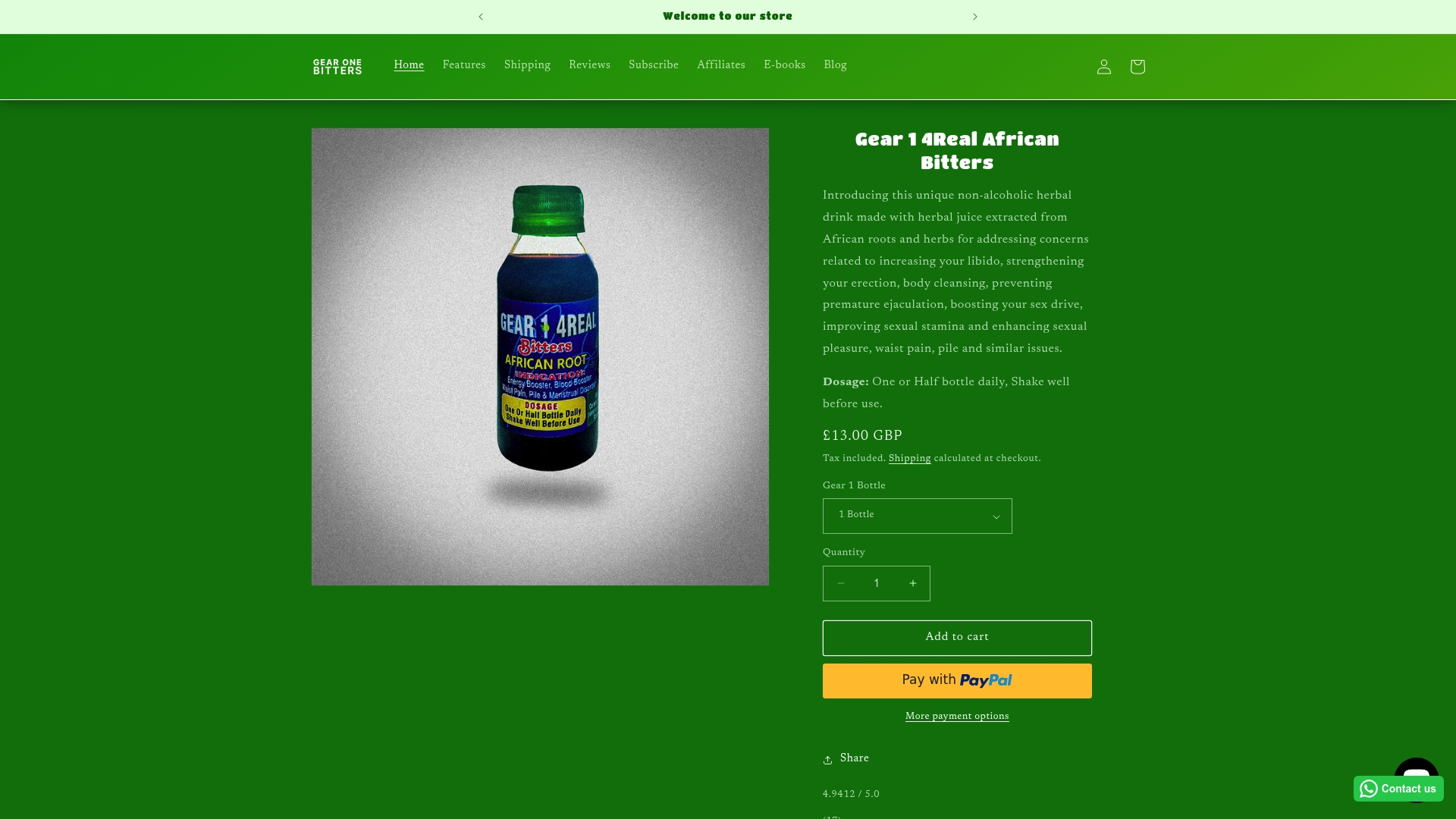
Gear1 is not a substitute for the relational steps in this guide, but for those who want botanical support alongside the phased plan, it offers a straightforward, alcohol-free option. Always consult your UK GP or pharmacist before combining any herbal product with prescription medicines. Do not use during pregnancy or breastfeeding unless a clinician advises otherwise.
Ready to explore natural herbal support as part of your reconnection plan? Visit Gear1’s shop to learn more about the African Bitters range and find the option that fits your wellness goals.
Useful sources and further reading
Research and clinical references:
- The Gottman Institute — research on turning toward, emotional attunement, and rekindling passion.
- Cohesa: Fix a dead bedroom in 30 days — week-by-week phased programme framework.
- Tavistock Relationships: better intimacy — guidance on non-goal-oriented affection.
UK professional support:
- NHS GP: first point of contact for medical causes, medication review, and referrals.
- COSRT (cosrt.org.uk): directory of UK-registered sex and relationship therapists.
- BACP (bacp.co.uk): register of accredited counsellors and psychotherapists.
Gear1 blog guides for further reading:
- Natural ways to improve couple intimacy
- Herbal aphrodisiac bedroom guide
- Role of herbal wellness in relationship quality
This article is general information, not medical or therapeutic advice. Confirm current guidance with your NHS GP, a registered pharmacist, or a qualified clinician for your own situation.
Recommended
- Natural ways to rekindle romance in your relationship – Gear 1 4Real African Bitters
- Natural ways improving couple intimacy: 2026 guide – Gear 1 4Real African Bitters
- How emotional connection enhances sex: a complete guide – Gear 1 4Real African Bitters
- Natural ways enhancing bedroom pleasure: 10 proven tips – Gear 1 4Real African Bitters
About Gear 1 4Real African Bitters — a non-alcoholic herbal bitters made from African root and herb extracts, blended to a traditional recipe rooted in generations of use. See the product and full ingredients list.
Food supplement. Not intended to diagnose, treat, cure or prevent any disease.